
Introduction
Bamboo furniture brings warmth, sustainability, and natural elegance to any home. Whether you’ve invested in a bamboo dining table, bedroom set, or outdoor loungers, proper care is essential to preserve their beauty and extend their lifespan. Unlike conventional wood or synthetic materials, bamboo requires specific maintenance techniques to prevent moisture damage, mold, and discoloration—especially in humid climates like Southeast Asia.
How to clean bamboo furniture? This comprehensive guide walks you through everything you need to know about cleaning and maintaining bamboo furniture, from daily care to deep cleaning and long-term preservation strategies.
What Supplies Do You Need?
What to clean bamboo furniture with?Before starting your bamboo furniture cleaning routine, gather these essential materials:
| Item | Purpose | Notes |
|---|---|---|
| Soft microfiber cloth | Dusting and polishing | Lint-free prevents scratches |
| White vinegar | Natural cleaner | Non-toxic alternative to chemicals |
| Mild dish soap | Gentle cleaning agent | Avoid harsh detergents |
| Warm water | Solvent | Distilled water prevents mineral deposits |
| Soft-bristled brush | Debris removal | Toothbrush-sized for crevices |
| Bamboo oil or natural wax | Protective coating | Extends furniture lifespan |
| Lint-free towels | Drying | Prevents water spots |
| Small bowl | Mixing solution | For diluting cleaners |
Recommended eco-friendly products:
-
Pure beeswax polish (sustainable alternative)
-
Organic coconut oil (natural protective layer)
-
Bamboo-specific furniture care kits (optimized formulations)
Step 1: Remove Dust and Surface Debris
Time required: 5–10 minutes
Start with the most important step—removing loose dust and particles that can scratch the surface during deeper cleaning.
How to do it:
-
Use a dry microfiber cloth to gently wipe the entire furniture surface, following the wood grain direction
-
Pay special attention to crevices, joints, and decorative grooves where dust accumulates
-
For hard-to-reach areas, use a soft-bristled toothbrush or small brush to dislodge debris
-
Wipe away dislodged dust with a fresh cloth
-
Never use a vacuum cleaner directly on bamboo (the brush can scratch the finish)
Why this matters: Dust particles act like tiny abrasives. Removing them first prevents you from grinding them into the finish during the next cleaning steps, which can create permanent micro-scratches.
Step 2: Prepare Your Natural Cleaning Solution
Time required: 3–5 minutes
The safest and most effective cleaning solution for bamboo furniture is made from common household ingredients.
Basic DIY Cleaning Formula:
-
1 cup warm distilled water
-
1 tablespoon white vinegar
-
2–3 drops of mild liquid dish soap (such as castile soap)
Mix in a small bowl and stir gently. The vinegar cuts through grime while the soap lifts oils and dirt without leaving residue.
Why avoid commercial cleaners:
Many furniture polishes contain silicone or wax that builds up over time, creating a dull, sticky layer. They may also contain harsh solvents that damage bamboo’s natural finish or cause discoloration. Your DIY solution is pH-neutral and won’t compromise the material.
For stubborn stains: Add 1 tablespoon of baking soda to the solution. Baking soda’s mild abrasiveness helps remove set-in marks without scratching.
Step 3: Clean the Surface Thoroughly
Time required: 15–20 minutes
Now that you’ve removed dust and prepared your cleaning solution, it’s time for the main cleaning step.
Application method:
-
Dampen your microfiber cloth with the cleaning solution—it should be moist, not dripping wet
-
Wring out excess liquid to prevent water from seeping into seams or wood grain, which causes swelling and damage
-
Wipe the furniture systematically in the direction of the grain, using gentle, circular motions
-
Work in sections to ensure even coverage—for example, clean one table leg at a time
-
Pay special attention to:
-
Armrests and edges (high-touch areas)
-
Spots around cup rings or water stains
-
Areas that haven’t been cleaned in months
-
-
For stubborn stains: Let the dampened cloth sit on the stain for 2–3 minutes to soften it, then gently scrub with a soft brush
Common stains and solutions:
| Stain Type | Cause | Solution |
|---|---|---|
| Water rings/white marks | Moisture penetration | Vinegar + baking soda paste; let sit 30 mins |
| Grease/fingerprints | Daily use and oils | Vinegar solution works best |
| Dark spots/mold | High humidity | Vinegar solution; consider dehumidifier |
| Sticky residue | Tape, labels, dried spills | Dampen cloth; gently scrub; don’t use solvents |
| Ink or pen marks | Accidental marking | Eraser or rubbing alcohol (test patch first) |
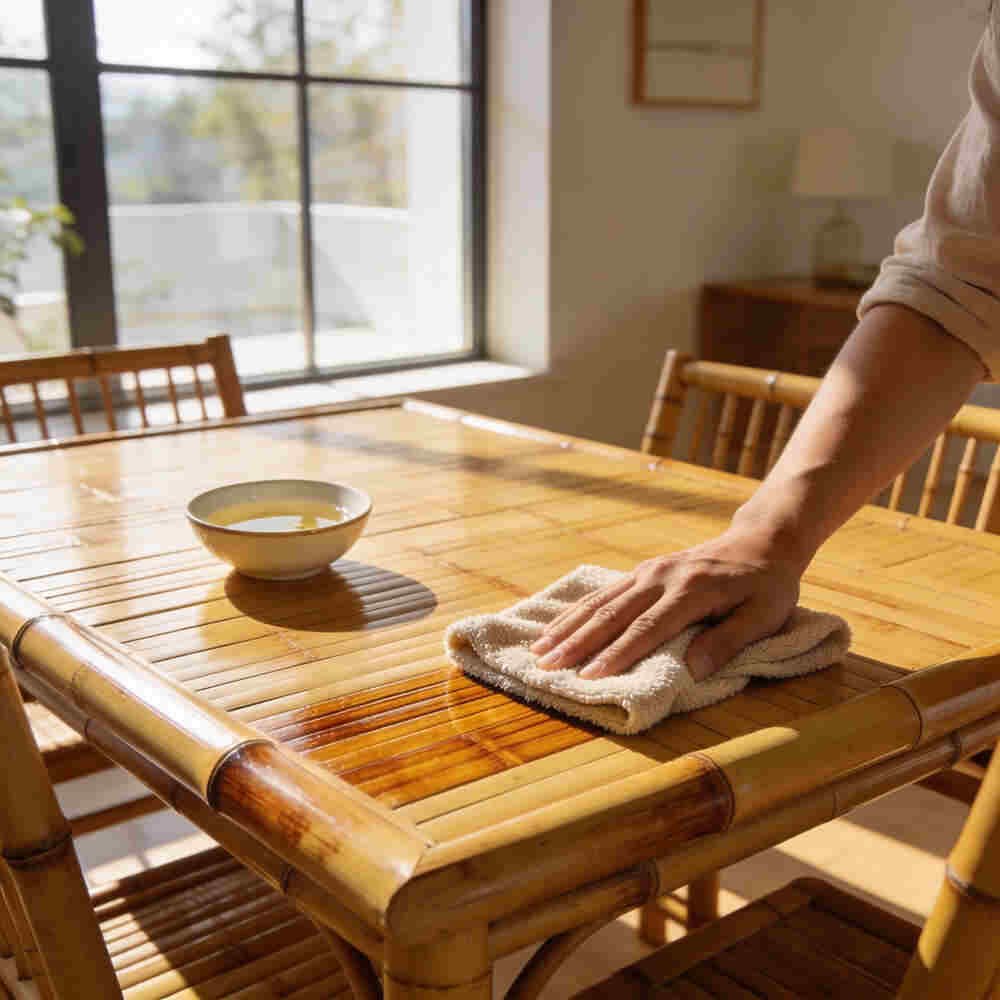
Step 4: Remove Moisture and Dry Completely
Time required: 10–15 minutes
This is the most critical step to prevent water damage, mold growth, and warping.
Drying process:
-
Immediately wipe the entire furniture with a clean, dry lint-free towel
-
Dry all surfaces, paying extra attention to:
-
Joints and connections
-
Grooves and carved details
-
Undersides of chairs and tables
-
Gaps between furniture sections
-
-
Open windows to allow air circulation and speed up evaporation
-
Do not leave furniture wet. Water that sits for hours can cause bamboo to swell, leading to permanent deformation
Why thorough drying is essential: Bamboo is a hygroscopic material—it absorbs and releases moisture depending on humidity levels. Excess water creates ideal conditions for mold spores to germinate. In tropical climates like Singapore, Hong Kong, and Southern China, this risk is significantly higher.
Prevention tip: Keep a dehumidifier running in rooms where bamboo furniture is stored, especially during rainy seasons or in naturally humid areas.
Step 5: Apply Protective Polish or Oil
Time required: 10 minutes
Once the furniture is completely dry, sealing the surface with a protective coating extends its lifespan and enhances its appearance.
Best options for bamboo:
1. Bamboo-Specific Oil or Wax
-
Penetrates the wood grain naturally
-
Restores luster and color
-
Provides water resistance
-
Application: Apply sparingly with a soft cloth, wipe excess after 10–15 minutes
-
Frequency: Every 3–6 months for indoor furniture; monthly for outdoor pieces
2. Natural Beeswax Polish
-
Creates a protective barrier against moisture
-
Adds a subtle shine
-
Longer-lasting than oil
-
Application: Apply thin coat, buff vigorously with lint-free cloth
-
Frequency: Every 6–12 months
3. Organic Coconut Oil (Budget option)
Should bamboo furniture be oiled? Yes,bamboo furniture should be oiled,applying special oil to bamboo can effectively prevent cracking, mold, and insects, and enhance its luster and durability. It is generally recommended to maintain it regularly,clean the surface and apply the oil evenly before use.
-
Natural and food-safe
-
Absorbs into wood
-
Adds subtle luster
-
Caution: Can attract dust if applied too generously
-
Application: 1 teaspoon rubbed into cloth, applied to entire surface
Application best practices:
-
Use minimal product—excess causes sticky buildup
-
Always buff the surface after application to prevent residue
-
Test any new product on a hidden area first
-
Avoid silicone-based polishes, which trap moisture
Step 6: Inspect for Damage and Address Specific Issues
Time required: 5–10 minutes
Regular inspection helps catch problems before they become irreversible.
What to look for:
Surface Damage
-
Small scratches: Sand lightly with fine-grit sandpaper (220+), then refinish with oil
-
Deep gouges: May require professional furniture repair or wood filler
-
Loose joints: Tighten hardware; if joints are wood-on-wood, consider furniture stabilizer
Moisture-Related Issues
-
Swelling or warping: Usually permanent; prevent by controlling humidity
-
White water marks: Use the vinegar + baking soda treatment immediately
-
Soft or spongy areas: Sign of rot; professional assessment needed
Finish Damage
-
Peeling varnish or paint: Sand and refinish, or call a professional
-
Dull appearance despite cleaning: May need new coat of protective oil or wax
-
Discoloration or darkening: Could indicate mold (address humidity issue immediately)
Common Mistakes to Avoid
Learning what not to do is just as important as proper cleaning technique:
❌ Using too much water
Why it’s harmful: Bamboo swells when soaked, causing permanent warping and mold growth.
Solution: Keep cloths only damp, not dripping.
❌ Using abrasive scrubbers or steel wool
Why it’s harmful: Damages the protective finish and creates scratches that trap moisture.
Solution: Use soft microfiber cloths and soft-bristled brushes only.
❌ Applying furniture polish or wax unevenly
Why it’s harmful: Creates sticky patches, attracts dust, and looks unprofessional.
Solution: Apply sparingly and buff thoroughly.
❌ Leaving bamboo furniture in direct sunlight
Why it’s harmful: UV rays fade the natural color and cause the wood to become brittle.
Solution: Use curtains or position furniture away from south-facing windows.
❌ Ignoring humidity levels
Why it’s harmful: Bamboo is extremely sensitive to moisture—too high humidity causes mold; too low causes cracking.
Solution: Maintain indoor humidity between 40–60%. Use a hygrometer to monitor levels.
❌ Using harsh chemical cleaners
Why it’s harmful: Chemical solvents strip natural oils, damage finishes, and release toxic fumes.
Solution: Stick with vinegar, mild soap, and natural oils.
How Often Should You Clean Bamboo Furniture?
Cleaning frequency depends on use and environment:
| Situation | Frequency | Reasoning |
|---|---|---|
| Daily-use dining table | Weekly light dusting; monthly deep clean | High contact and spill risk |
| Bedroom furniture | Monthly dusting and cleaning | Moderate use, less spill risk |
| Decorative pieces | Quarterly | Low contact; mainly dust removal |
| Outdoor bamboo furniture | Bi-weekly in dry months; weekly in rainy season | Weather exposure accelerates buildup |
| Tropical/humid climate homes | 2 weeks for dusting; monthly for deep clean | Mold and mildew risk is higher |
How to Prevent Bamboo Furniture Damage
Prevention is more effective than repair. Here are proven strategies:
1. Control Indoor Humidity
-
Maintain humidity levels between 40–60%
-
Use a humidifier in dry climates
-
Use a dehumidifier in humid climates
-
Improve ventilation by opening windows daily when weather permits
2. Protect from Water and Spills
-
Use coasters for drinks
-
Use placemats and table runners
-
Wipe spills immediately (within 30 seconds)
-
Never place bamboo furniture near water sources like aquariums or fountains
3. Avoid Temperature Fluctuations
-
Keep furniture away from heating vents or air conditioning units
-
Prevent exposure to direct heat sources
-
Avoid placement near radiators or fireplaces
-
Rapid temperature changes cause wood to expand and contract, creating cracks
4. Protect from UV Damage
-
Position furniture away from direct sunlight
-
Use UV-protective window treatments
-
Rotate furniture position annually to ensure even fading (if any)
5. Minimize Direct Contact
-
Use felt pads under chair and table legs to prevent scratches
-
Place protective glass tops on frequently used tables
-
Use furniture covers for long-term storage
Maintenance Schedule for Different Furniture Types
Bamboo Dining Table
-
Daily: Wipe spills immediately
-
Weekly: Dust and light cleaning
-
Monthly: Deep clean with vinegar solution
-
Quarterly: Apply protective oil or wax
-
Annually: Full inspection and refinishing as needed
Bamboo Chairs and Stools
-
Weekly: Dust seat and backrest
-
Monthly: Clean and condition
-
Quarterly: Inspect joints and tighten hardware
-
Bi-annually: Full maintenance and refinishing
Bamboo Bedroom Furniture (Dresser, Nightstand, Bed Frame)
-
Monthly: Dust and light cleaning
-
Quarterly: Deep clean with mild solution
-
Bi-annually: Apply protective coating
-
Annually: Full inspection
Outdoor Bamboo Furniture
-
Weekly: Rinse with water to remove dirt and pollen
-
Bi-weekly: Deep clean with vinegar solution
-
Monthly (or after rain): Check for mold and moisture
-
Seasonal: Apply weather-resistant sealant before rainy seasons
-
Quarterly: Full maintenance and protective oil application
Dealing with Mold and Mildew
If your bamboo furniture has developed mold or mildew (recognizable by dark spots or musty odor), act quickly:
Mild Mold (surface-level)
-
Mix equal parts white vinegar and water
-
Dampen a cloth with the solution
-
Wipe affected areas thoroughly
-
Dry immediately with a clean towel
-
Increase ventilation and reduce humidity
-
Monitor for recurrence
Severe Mold (deep penetration)
-
Consult a professional furniture restorer
-
Do not attempt DIY treatment—it may spread spores
-
Consider moving furniture to a drier location or replacing it
-
Address the underlying humidity problem in your home
Prevention: Keep humidity below 55%, ensure good air circulation, and never place bamboo furniture in basements or damp areas without proper ventilation.
When to Call a Professional
While most bamboo furniture care is DIY-friendly, seek professional help for:
-
Severe water damage or rot (soft, spongy areas)
-
Major structural damage (broken joints, split wood)
-
Professional refinishing (stripping and recoating entire piece)
-
Antique or valuable bamboo furniture (worth more than $1,000)
-
Allergic reactions to DIY treatments (rare but possible)
-
Persistent mold issues that resist home treatment
Professional restorers have specialized equipment, high-quality finishes, and expertise to safely repair damage while maintaining the bamboo’s integrity and value.
Cost-Benefit Analysis: DIY vs. Professional Care
| Aspect | DIY Home Care | Professional Service |
|---|---|---|
| Cost | $15–30/month | $150–500+ per service |
| Time | 30–45 minutes monthly | N/A (professional handles) |
| Results | Good for routine maintenance | Excellent for deep damage |
| Frequency | Monthly to quarterly | Annually or as needed |
| Best for | Regular upkeep and prevention | Restoration and major issues |
Recommendation: Use DIY care for routine maintenance, then invest in professional service annually for high-value or frequently used pieces.
FAQs: Bamboo Furniture Cleaning
Q1: Can I use furniture polish on bamboo furniture?
A: Standard furniture polish often contains silicone or wax that builds up over time. Stick with bamboo-specific oils or natural wax instead. If you must use polish, test it on a hidden area first and avoid buildup by buffing thoroughly.
Q2: Is bamboo furniture waterproof?
A: No. Bamboo is hygroscopic and absorbs moisture readily. While it has better water resistance than softwood, it’s not waterproof. Always dry spills immediately and maintain humidity levels below 60%.
Q3: How long does bamboo furniture last?
A: With proper care, bamboo furniture lasts 5–10 years for indoor pieces and 3–5 years for outdoor furniture. Some pieces, especially antiques or high-quality crafted items, can last 20+ years.
Q4: Can I refinish bamboo furniture at home?
A: Simple touch-ups are possible, but full refinishing (sanding and recoating) is best left to professionals. Incorrect technique can damage the piece or create safety hazards.
Q5: Why does my bamboo furniture feel sticky?
A: Sticky residue usually indicates excess buildup from polish, wax, or dust accumulation. Clean with a vinegar solution and ensure you’re buffing polish thoroughly after application. Apply less product next time.
Q6: How do I remove permanent stains from bamboo?
A: For stubborn stains that won’t respond to cleaning:
-
Try a paste of vinegar and baking soda (let sit 30 minutes)
-
Use fine-grit sandpaper (220+) to gently sand the stain
-
Refinish with protective oil
-
If all else fails, consult a professional restorer
Q7: Is bamboo furniture sustainable?
A: Yes, bamboo grows rapidly (mature in 3–5 years vs. 20–30 years for hardwood), requires minimal pesticides, and regenerates after harvesting. Proper care extends its life, maximizing the environmental benefits of your purchase.
Q8: Can I use bamboo furniture outdoors?
A: Yes, but outdoor bamboo furniture requires more frequent maintenance. Treat it monthly with weather-resistant sealant, bring it inside during extreme weather, and monitor for mold in humid seasons.
Q9: What’s the best way to store bamboo furniture long-term?
A: Store in a cool, dry place with humidity between 40–60%. Cover with breathable cloth (not plastic), ensure good air circulation, and check periodically for mold or damage.
Q10: Why does bamboo furniture darken over time?
A: Darkening is natural as bamboo ages and oxidizes. It’s not harmful. If you prefer the original color, UV-protective finishes or regular application of natural oil can slow the process. Avoid direct sunlight to minimize darkening.
Q11:Does water damage bamboo furniture?
A:Yes. Bamboo easily absorbs moisture and warps; prolonged contact with water can lead to mold, cracking, or loss of luster. For daily cleaning, wipe it with a semi-dry, soft cloth. Avoid soaking or direct sunlight; keeping it well-ventilated and dry can effectively extend its lifespan.
The Bottom Line: Your Bamboo Furniture Care Action Plan
Bamboo furniture is a sustainable, beautiful investment that rewards consistent care with years of functionality and beauty. By following the six-step cleaning process outlined in this guide, you’ll keep your pieces looking new and prevent costly damage.
Start today with these three simple actions:
-
Dust your bamboo furniture with a soft microfiber cloth
-
Prepare your natural cleaning solution (vinegar + soap + water)
-
Schedule monthly deep cleaning into your home maintenance routine
In 6 months, you’ll notice:
-
Enhanced natural grain and color
-
Improved surface protection and durability
-
Reduced risk of mold, mildew, and water damage
-
Furniture that looks as good as the day you bought it
Whether you’re a homeowner looking to preserve your investment or someone new to bamboo furniture, consistency is key. Make cleaning and maintenance a habit, and your bamboo furniture will remain a source of pride and comfort for years to come.
Additional Resources for Bamboo Furniture Enthusiasts
-
Humidity monitoring: Invest in a digital hygrometer ($10–20) to track indoor moisture levels
-
Natural products: Explore bamboo-specific care kits from brands specializing in sustainable home goods
-
Local expertise: In humid climates like Singapore and Hong Kong, consult with local furniture restorers who understand regional challenges
-
Community forums: Join online forums dedicated to furniture care and sustainable living for tips and product recommendations


Leave A Comment