
Introduction
A bamboo cutting board is more than just a kitchen tool—it’s a sustainable investment in your home. Known for their durability, natural antibacterial properties, and elegant aesthetic, bamboo cutting boards have become a staple in eco-conscious kitchens worldwide. Yet many home cooks don’t realize that proper care is essential to unlock their full potential and extend their lifespan to decades.
Unlike plastic or traditional wooden boards, bamboo requires specific maintenance techniques to prevent warping, cracking, and deterioration. With the bamboo kitchenware market projected to grow from USD 7.48 billion in 2026 to USD 13.82 billion by 2035, more consumers than ever are investing in these eco-friendly kitchen essentials—and they need reliable guidance on how to care for them.
How to clean and disinfect a bamboo cutting board? This comprehensive guide reveals professional care strategies that will keep your bamboo cutting board looking pristine and performing optimally for years to come. Whether you’re a new owner seeking best practices or an experienced cook looking to refine your maintenance routine, you’ll find actionable steps, expert insights, and solutions to common challenges.
Why Bamboo Cutting Boards Matter: The Eco-Conscious Kitchen
Before diving into care instructions, it’s worth understanding why bamboo cutting boards deserve special attention.
The Sustainability Advantage
Bamboo is one of the world’s fastest-growing plants, reaching maturity in just 3-5 years compared to traditional hardwood trees that take decades. This renewable characteristic, combined with bamboo’s natural biodegradability, makes it an ideal choice for environmentally conscious consumers. As sustainability trends accelerate—with 51.8% of bamboo product consumption driven by home users prioritizing eco-friendly alternatives—the demand for bamboo kitchenware continues to surge.
The Material Challenge
The very properties that make bamboo attractive also create unique care requirements. Bamboo cutting boards are typically constructed by laminating strips of bamboo fiber together with food-safe adhesives. This construction creates strength and durability but also means the board is vulnerable to moisture damage if not properly maintained.
Understanding this structural reality is key: proper care isn’t just about aesthetics; it’s about protecting your investment and ensuring food safety.
The Fundamentals: Daily Cleaning Routines
Why Speed Matters
The golden rule of bamboo cutting board care is simple: clean and dry immediately after use. Is bamboo cutting board washable? Yes,we can wash the bamboo cutting board,but should wash it immediately after using.Unlike traditional hardwood boards, bamboo’s laminated construction means water can seep into the seams between strips. Left unattended, moisture penetrates the glue lines, causing delamination (separation of layers), warping, and ultimately board failure.
Step-by-Step Daily Cleaning Process
Step 1: Rinse Immediately
Don’t wait for the sink to fill. As soon as you finish using your board, rinse it under warm running water to remove food particles. This prevents strong-smelling ingredients—particularly onion, fish, and garlic—from becoming embedded in the bamboo.
Step 2: Apply Gentle Soap
Use warm water and mild dish soap. Experts recommend Dr. Bronner’s Organic Soap or other pH-neutral, plant-based soaps free from harsh chemicals. Harsh cleaners strip away the bamboo’s natural protective oils, leading to dryness and cracking.
Step 3: Scrub with Soft Materials
Use a soft sponge, soft-bristled brush, or microfiber cloth in gentle circular motions. Never use abrasive scrubbers, steel wool, or aggressive scrubbing techniques—these can raise bamboo fibers, weaken glue joints, and damage the finish.
Pay special attention to:
-
Both surfaces (top and underside accumulate bacteria equally)
-
Edges and corners (vulnerable glue seams are exposed here)
-
Juice grooves (if your board has them—use an old toothbrush for hard-to-reach areas)
Step 4: Rinse Thoroughly
Rinse multiple times with clean, warm water to remove all soap residue. Any leftover soap can create a film and leave behind unsafe residues.
Step 5: Dry Completely and Immediately
This is non-negotiable. Use an absorbent cotton towel or microfiber cloth to wipe both surfaces completely. Then, stand the board upright to air dry for several hours or overnight before storing.
Why the vertical position matters: When you prop the board upright (or use a drying rack), air circulates around all sides, preventing moisture from being trapped underneath—where mold and odors thrive. This step alone can extend your board’s lifespan significantly.
What NOT to Do During Daily Cleaning
Never Soak Your Board
Even brief soaks in the sink can cause swelling at the seams. If you must soak (e.g., for stubborn stains), limit it to 2-3 minutes maximum and dry immediately afterward.
Never Use the Dishwasher
Do bamboo cutting boards need to be hand washed? Yes,the bamboo cutting board should be washed by hand,never put it in the dishwasher.Why? Because the combination of high heat, strong detergents, and steam breaks down bamboo fibers and damages the adhesive bonding the strips together. The dishwasher is the fastest path to a ruined board.
Avoid Harsh Chemicals
Bleach, rubbing alcohol, and commercial degreasers strip the bamboo’s natural oils. Instead, for disinfection after handling raw meat, use a diluted vinegar solution (1 part vinegar to 4 parts water) or a gentle bleach solution (1 tablespoon bleach per gallon of water, applied briefly and rinsed thoroughly).
Monthly Maintenance: The Oiling Ritual
Why Oiling Matters
Bamboo is wood, and wood requires moisture to stay healthy. Over time, especially with regular use, bamboo cutting boards dry out. Do bamboo cutting boards need to be oiled? Yes,bamboo cutting board need to be oiled,without oiling, the board becomes brittle and prone to cracking and splitting. A monthly oiling routine replenishes moisture and restores the board’s natural protective coating.
Choosing the Right Oil
The Only Option: Food-Grade Mineral Oil
Use specifically food-grade mineral oil designed for cutting boards. This is crucial. Never use:
-
Cooking oils (olive, canola, walnut, etc.)—these turn rancid and create health hazards
-
Non-food-grade mineral oil—not safe for food contact
-
Linseed oil or tung oil—these can become sticky or leave unpleasant odors
Top-quality options include bamboo finishing oils from reputable manufacturers like Bambu Finishing Oil or Royal Craft Wood’s food-grade mineral oil.
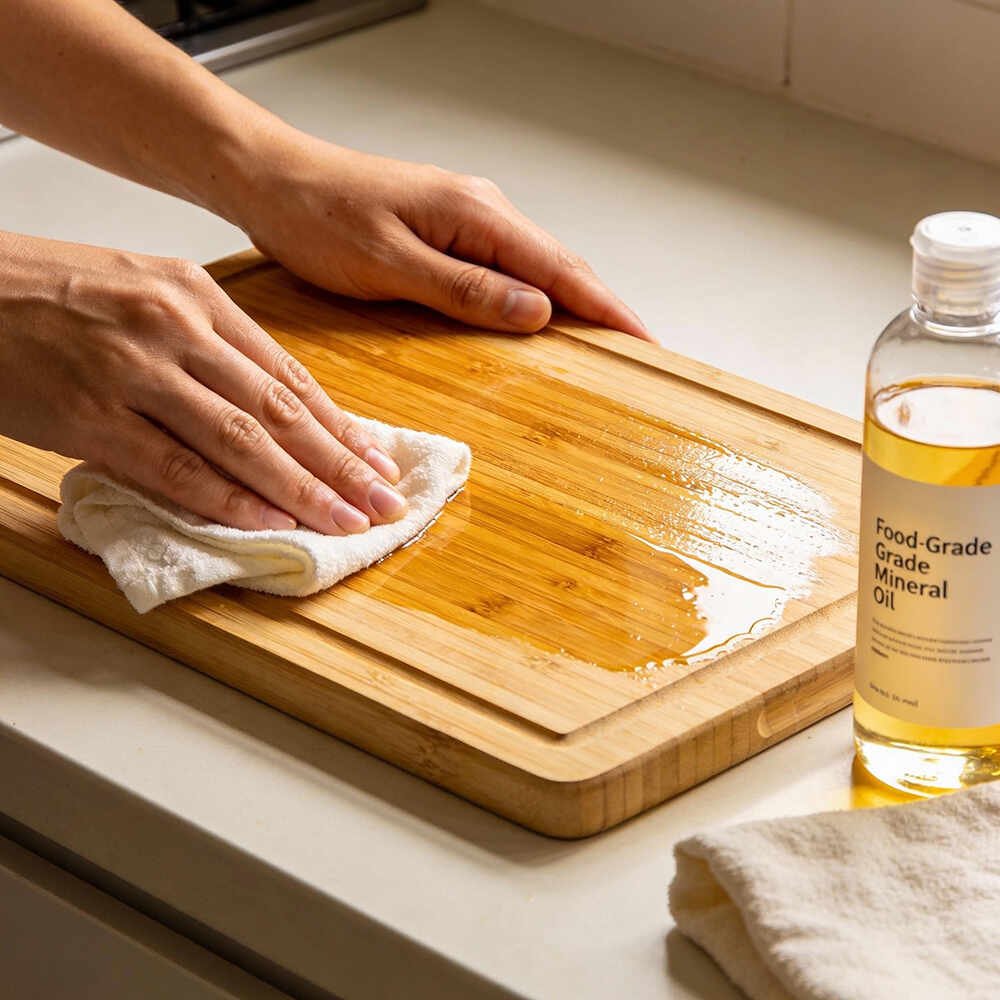
The Oiling Process
-
Ensure the board is completely dry from any cleaning or moisture.
-
Pour a small amount onto a clean cloth—a capful or two is sufficient (remember, a little goes a long way).
-
Apply in long, sweeping strokes across the entire surface, using gentle pressure. Cover both the top and underside evenly.
-
Let it absorb for 20-30 minutes, allowing the bamboo fibers to drink in the moisture.
-
Wipe away any excess with a clean, dry cloth. The board should have a subtle sheen, not appear wet or greasy.
-
Allow full drying (preferably overnight) before storing or using the board again.
Oiling Frequency
For daily-use cutting boards: Once per month is the standard recommendation. If you use your board multiple times daily, increase frequency to every two weeks.
For occasional-use or specialty boards: Oil after hosting a party or significant cooking event to restore moisture.
Seasonal consideration: During drier months (winter in many climates), boards lose moisture faster, so slightly increased oiling frequency may be necessary.
Deep Cleaning: Addressing Stains, Odors, and Damage
Even with meticulous daily care, bamboo cutting boards accumulate stains and odors over time. Here’s how to restore them without causing harm.
Removing Stubborn Stains
Method 1: Coarse Salt Treatment
After regular washing and drying, place coarse sea salt on stained areas and scrub gently in circular motions using your hand or a paper towel. The salt absorbs excess moisture while the abrasive texture lifts discoloration without scratching the bamboo’s finish. Rinse and dry thoroughly.
Method 2: Baking Soda Paste
Mix equal parts baking soda and water to create a paste. Apply to stained areas, let sit for 5-10 minutes, then scrub gently with a soft sponge. Rinse thoroughly and dry immediately. This method works particularly well for fruit stains and oxidation marks.
Eliminating Odors
Strong food odors are common with bamboo boards (especially after cutting garlic, onion, or fish). Address them quickly:
-
Wash immediately with hot soapy water after use (prevents absorption)
-
For lingering odors: Wipe the board with white vinegar, rinse thoroughly, and dry
-
Natural deodorizer: Rub the board with lemon juice and let sit for 10 minutes, then rinse and dry
-
Baking soda: Sprinkle baking soda on the dry board, let sit overnight, then brush off and wipe clean
Addressing Deep Knife Marks and Scratches
Over time, even careful use leaves marks. Unlike major repairs, minor scratches can be addressed:
-
For light surface marks: Sand with fine-grit sandpaper (150-220 grit) using light pressure and long strokes in the direction of the grain. This smooths the surface.
-
For deeper cuts: Start with 80-grit sandpaper using medium pressure, then progress to fine-grit for finishing. Sand straight up and down (not in circles) to avoid grain distortion.
-
After sanding: Wipe with a damp cloth, let dry completely, then apply oil to restore the finish.
For severe damage (cracking, major delamination), professional repair or replacement may be necessary.
Sanitizing After Raw Meat
According to food safety guidelines, special attention is needed when using bamboo boards for raw meat, poultry, or seafood:
CDC-Recommended Bleach Solution:
-
Mix 1 tablespoon unscented household bleach with 1 gallon of water
-
Wipe the entire board with this solution using a clean cloth
-
Let sit for 2-3 minutes
-
Rinse thoroughly 3-4 times with clean water
-
Dry completely with a towel
This approach is more effective than wiping with vinegar when pathogen elimination is critical.
Storage: Creating the Ideal Environment
Proper storage completes the care cycle. Incorrect storage undoes all your maintenance efforts.
The Best Storage Approach
-
Store vertically when possible, allowing air circulation on all sides
-
Use a wooden drying rack specifically designed for cutting boards (bamboo manufacturers like Totally Bamboo offer 7-slot racks)
-
Ensure good ventilation in the storage area
-
Keep in a cool, dry location away from direct heat sources and humidity extremes
What to Avoid
-
Horizontal stacking traps moisture underneath
-
Crowded cabinets prevent air circulation
-
Near dishwashers or steamy areas where humidity concentrates
-
Direct sunlight (UV rays fade the natural bamboo color over time)
-
Above stoves or near heaters (dry heat can cause cracking)
The Market Context: Why Proper Care Pays Off
Understanding the broader market helps explain why investing in bamboo cutting board care matters.
The global bamboo kitchenware market is experiencing explosive growth, driven by three primary factors:
-
Sustainability demand: Consumers increasingly seek eco-friendly alternatives to plastic and synthetic materials
-
Home cooking resurgence: Post-pandemic interest in home cooking has driven significant kitchenware investment
-
Health consciousness: Bamboo’s natural antibacterial properties appeal to safety-focused home cooks
As this market grows—projected at a 7.3% compound annual growth rate through 2035—so does consumer understanding that proper care preserves both functionality and environmental benefit. A cutting board maintained correctly can serve a household for decades, maximizing the sustainable value of the initial purchase.
Troubleshooting Common Problems
Problem: Warping or Cupping
Cause: Uneven moisture absorption, improper drying
Solution:
-
Ensure both surfaces dry evenly (vertical storage helps)
-
Increase oiling frequency in humid climates
-
Check for water exposure from dishwashers or sinks
Problem: Cracking or Splitting
Cause: Insufficient moisture; overly dry environment
Solution:
-
Increase oiling frequency to every 2 weeks
-
Reduce exposure to direct heat sources
-
Maintain consistent humidity in your kitchen
-
Avoid placing near air conditioning vents
Problem: Delamination (Layer Separation)
Cause: Water seeping into glue seams; high humidity
Solution:
-
Prevent through immediate drying after cleaning
-
Consider replacing the board if delamination is extensive (glue joints are compromised)
-
Avoid high-humidity storage areas
Problem: Discoloration or Graying
Cause: Oxidation from air and light exposure; mold growth
Solution:
-
Lightly sand with fine-grit sandpaper to restore appearance
-
Ensure proper ventilation during storage
-
Apply oil more frequently if discoloration indicates dryness
-
Clean with vinegar solution if mold is suspected (indicated by black spots)
Pro Tips from Industry Experts
Tip 1: Designate Boards by Task
Following food safety best practices, many experts recommend maintaining separate boards for different food types:
-
One for vegetables and fruits
-
One for raw meat
-
One for dairy or prepared foods
-
One for bread or baked goods
This practice, combined with rotating board use, extends the lifespan of any individual board while minimizing cross-contamination risk.
Tip 2: Establish a Maintenance Calendar
Create a simple reminder system:
-
Daily: Clean and dry immediately after use
-
Weekly: Inspect for any issues (odors, discoloration, warping)
-
Monthly: Oil the board
-
Quarterly: Deep clean and sand if needed
-
Annually: Comprehensive assessment and maintenance
Tip 3: Invest in Complementary Accessories
Quality drying racks, proper mineral oil, and soft-bristled brushes are inexpensive investments that dramatically extend board longevity. Avoid cheap, aggressive cleaning tools.
Tip 4: Document Your Care Routine
If caring for multiple bamboo boards or sharing your kitchen with family members, a visible care guide ensures consistency. Improper care by one person can undo others’ efforts.
Comparing Bamboo to Other Cutting Board Materials
Understanding how bamboo stacks up against alternatives reinforces why proper care is essential:
| Aspect | Bamboo | Hardwood | Plastic | Glass |
|---|---|---|---|---|
| Durability | 10+ years with care | 10-20 years | 2-5 years | 5-10 years |
| Knife-Friendliness | Excellent; gentle on blades | Good | Poor; quickly gets grooved | Poor; damages knives |
| Sanitation | Excellent; naturally antibacterial | Good | Moderate; grooves harbor bacteria | Excellent but impractical |
| Sustainability | Excellent; renewable resource | Good; but slow-growing | Poor; plastic waste | Moderate; breakage issues |
| Maintenance Required | Moderate (regular oiling) | Moderate (occasional oiling) | Minimal | Minimal |
| Cost | Moderate-High | High | Low | Moderate |
| Aesthetic Appeal | High | High | Low | High |
Conclusion: Extend Your Board’s Lifespan to Decades
A bamboo cutting board is an investment in sustainable living and culinary quality. With consistent, simple care—daily washing and drying, monthly oiling, and occasional deep cleaning—your board will serve your kitchen beautifully for decades, not years.
The maintenance routine outlined in this guide isn’t onerous; it’s simply respecting the material’s nature. Bamboo requires moisture, gentle handling, and prompt drying. Provide these, and your cutting board will reward you with reliability, sustainability, and timeless beauty.
As the global bamboo kitchenware market continues its rapid expansion, more households are making the sustainable choice. Join them with confidence, knowing that proper care transforms a good purchase into a lifetime investment.
FAQs: Quick Answers to Common Questions
Q: Can I use olive oil or coconut oil to condition my bamboo cutting board?
A: No. Only food-grade mineral oil. Cooking oils turn rancid and create health hazards on surfaces where food is prepared.
Q: How do I know if my board has mold?
A: Mold appears as black or dark green spots, usually in corners or grooves. If detected, clean with a vinegar solution, allow extended air drying, and increase storage ventilation.
Q: Is it safe to use my bamboo board with raw meat?
A: Yes, with proper sanitization. Use the diluted bleach solution outlined in the guide after handling raw meat, then rinse thoroughly and dry completely.
Q: Can I repair a cracked bamboo cutting board?
A: Minor surface cracks can sometimes be managed by sanding and oiling, but structural cracks that split the board usually mean replacement is necessary.
Q: How often should I replace my bamboo cutting board?
A: With proper care, 10-15+ years is typical. Replace when delamination, major cracks, or warping compromises safety or functionality.
Q: Does the brand of bamboo cutting board matter for care?
A: All bamboo boards require similar care fundamentals. Premium brands (Totally Bamboo, Royal Craft Wood, Bambu) may have superior construction and finish, but care principles remain constant.

Leave A Comment