
By a gardening enthusiast with 10+ years of hands-on growing experience
If you’ve ever watched a tomato plant topple over mid-summer or seen your sweet peas collapse under their own weight, you already know why bamboo garden canes are a non-negotiable tool for any serious grower. Lightweight, strong, eco-friendly, and surprisingly affordable — bamboo canes are one of the best plant supports you can add to your garden toolkit.
In this guide, I’ll walk you through everything you need to know: how to choose the right size, which thickness works for which plant, how to use them for DIY projects, and how to make them last longer. Whether you’re looking for bamboo garden canes for tomatoes, sweet peas, or a trellis build, this guide has you covered.
Why Choose Bamboo Garden Canes?
Bamboo is one of the fastest-growing plants on Earth, which makes bamboo canes an incredibly sustainable and eco-friendly alternative to plastic or metal plant stakes. Compared with metal and plastic plant support, bamboo plant support are generally more cost-effective.Here’s why gardeners keep coming back to them:
- Natural and biodegradable— no plastic waste left in your soil
- Lightweight yet surprisingly strong— easy to carry, hard to snap
- Versatile— works for vegetables, flowers, climbing vines, and more
- Cost-effective— especially when bought in bulk packs
- Aesthetically pleasing— they look natural in any garden setting
The one honest downside? Bamboo canes inserted into the ground can start to rot at the base after 1–2 seasons, especially in wet climates. A simple fix is to apply a coat of tung oil to the bottom third before inserting, or use a protective stake cap to slow moisture absorption.
Bamboo Garden Canes Size Guide: 4ft to 8ft
Choosing the right length is the single most important decision when buying bamboo garden canes. Here’s a breakdown by plant type and growing habit:
| Size | Best For | Typical Thickness |
|---|---|---|
| 4ft (1.2m) | Potted plants, small herbs, short annuals | 8–10mm |
| 5ft (1.5m) | Peppers, bush beans, medium flowering plants | 10–12mm |
| 6ft (1.8m) | Tall tomatoes, dahlias, standard roses | 12–14mm |
| 7ft (2.1m) | Runner beans, climbing peas, large shrubs | 14–16mm |
| 8ft (2.4m) | Sweet peas on arches, tall climbing vines, trellis frames | 16–20mm |
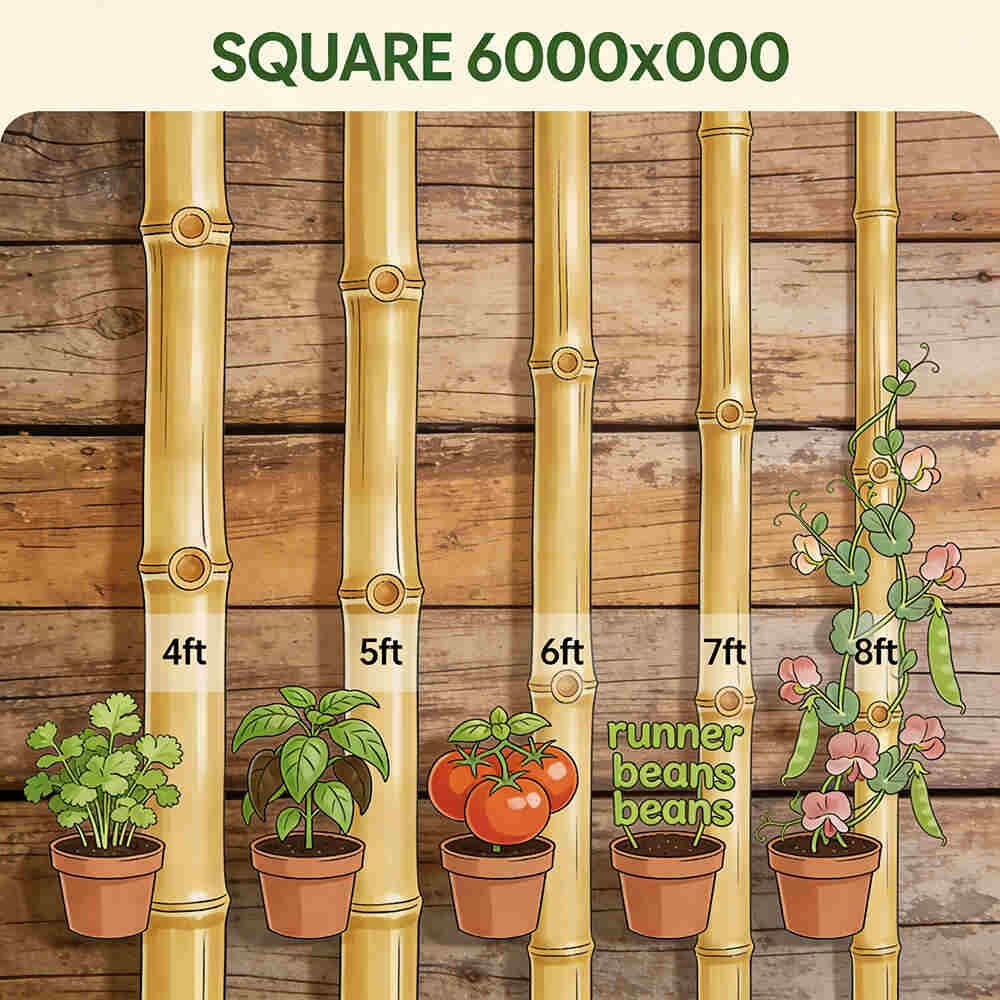
Pro tip from experience: I once bought 8mm-thick canes for my tomatoes thinking they’d save money — by July, three had snapped under the weight of the fruit. For tomatoes, always go 12–14mm thick and at least 6ft tall. For lightweight vines and sweet peas, 8–10mm is perfectly adequate.
Best Uses by Plant Type
Tomatoes
Tomatoes are the most demanding plant when it comes to support. In the bamboo garden products market,the bamboo garden canes for tomatoes are always in big demand.Use 6ft bamboo garden canes, 12–14mm thick, and push them at least 30cm into the soil beside each plant. Tie the main stem loosely using soft garden twine at 20–30cm intervals as the plant grows. For indeterminate (cordon) varieties like Alicante or Gardener’s Delight, you may even need a 7ft cane by late summer.
Sweet Peas & Climbing Vines
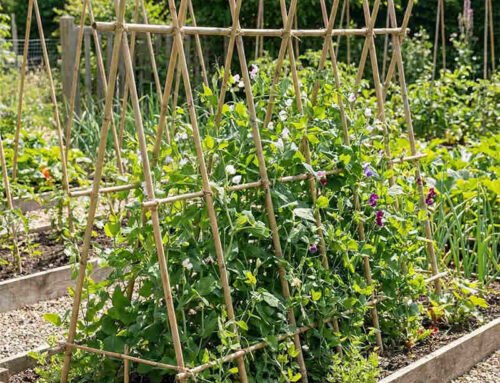
Sweet peas are light, so 5ft to 6ft canes work beautifully. The classic method is to arrange 6–8 canes in a wigwam (teepee) formation, tying the tops together with twine. This creates a stable, attractive structure that also supports cucumbers and pole beans. Use 8–12mm thick canes — no need to go heavier for these delicate climbers.
Structural Trellises & DIY Projects
For bamboo garden canes diy projects — like building a raised trellis, a bean tunnel, or a cold frame support — use 7ft–8ft canes in the 16–20mm thickness range. Lash them together with jute twine or specialist garden wire clips. A simple A-frame trellis made from 6 canes can support a full row of runner beans through an entire season.
Potted Plants & Indoor Support
Don’t overlook bamboo canes for pots! 4ft canes at 8–10mm are ideal for supporting standard roses, tall potted dahlias, or ornamental grasses. Insert 3 canes around the edge of the pot, tie at the top, and loop soft twine around the plant at the midpoint.
How to Cut Bamboo Garden Canes
One of the most common questions (and a top Google search!) is how to cut bamboo garden canes to a custom length. Here’s how to do it cleanly:
- Use a fine-tooth saw or strong garden shears— a hacksaw works best for canes thicker than 12mm.
- Score the cane firstby pressing a sharp blade around the circumference — this prevents splintering.
- Cut at a node(the raised ring around the cane) when possible — this leaves a stronger, cleaner edge.
- Sand the cut end lightlywith coarse sandpaper to avoid rough edges that could damage plant stems or your hands.
Avoid using basic scissors or blunt secateurs on thick canes — you’ll crush rather than cut, weakening the structural integrity.
Fresh vs. Dried Bamboo: What’s the Difference?
When shopping, you may come across both fresh-cut and dried (cured) bamboo garden canes. Here’s the practical difference:
- Fresh bamboois greener in colour, slightly more flexible, and heavier. It will dry and lighten over time but may warp slightly as it cures in your garden.
- Dried/cured bamboois lighter, more rigid, and ready to use straight away. It’s typically more uniform in colour (golden-tan) and lasts longer in the ground.
For most gardeners, dried canes are the better buy — they’re what you’ll find in packs of 20, 40, or 50 from most garden centres and online retailers.
Buying Guide: Where to Get Bamboo Garden Canes
Following are information of bamboo garden canes for sale and bamboo garden canes wholesale,
- Garden centres— ideal for seeing quality in person; great for smaller packs of 20–40 canes
- Amazon— excellent for bulk orders (packs of 50–100); compare thickness specs carefully before buying
- Discount retailers (B&M, Home Bargains)— surprisingly good value for standard 4ft–6ft sizes; quality varies, so check for splits and uniformity
- Wholesale suppliers— best for large projects or allotment growers; buying bamboo garden canes bulk can reduce cost per cane by 50%+
- Local nurseries— often stock both cut and fresh bamboo; ask if they carry heavy-duty 18–20mm canes for structural use
When buying online, always check the reviews for thickness accuracy — some sellers list “7ft bamboo canes” that arrive noticeably shorter or thinner than described.
FAQ: Bamboo Garden Canes
Q: How long do bamboo garden canes last?
Properly cured bamboo canes last 2–5 years above ground. In direct soil contact, expect 1–2 seasons before the base softens. Treat the bottom with tung oil or varnish to extend their life.
Q: Can I reuse bamboo garden cane?
Yes — clean them at the end of each season with a diluted bleach solution (1:10) to remove disease spores, then store them dry in a shed or garage. Reusing canes is eco-friendly and cost-saving.
Q: Are bamboo canes safe for food crops?
Absolutely. Natural, untreated bamboo is completely safe around vegetables and fruit plants. Avoid canes that appear lacquered or chemically treated.
Q: What size bamboo cane do I need for tomatoes?
For most tomato varieties, use 6ft (1.8m) bamboo canes, 12–14mm thick. For very tall cordon varieties, go up to 7ft.
Q: How many canes come in a pack?
Standard retail packs contain 20, 40, or 50 canes. Bulk wholesale packs often come in units of 100 or 500.
Q: What thickness of bamboo garden cane do I need for sweet peas and climbing vines?
For lightweight climbers like sweet peas, runner beans, and morning glories, 8–10mm thick canes are more than sufficient. These plants don’t carry heavy fruit weight — they use tendrils to cling, so the cane only needs to act as a guide rather than a load-bearing support. Arrange them in a wigwam of 6–8 canes tied at the top for a classic, sturdy structure that looks great all season.
Q: How do I stop bamboo garden canes from rotting in the soil?
Rotting at the soil line is the most common reason gardeners replace canes prematurely. To extend lifespan significantly, try these methods:
- Apply tung oil or linseed oilto the bottom 30cm before insertion — this creates a natural moisture barrier
- Use rubber stake caps or sleevesto cover the section buried in soil
- Avoid leaving canes in wet soil over winter— pull them out, clean them, and store dry
- Char the tip lightlywith a blowtorch (a traditional Japanese technique called yakisugi) — this carbonises the surface and makes it highly rot-resistant
Q: Can I grow bamboo in my garden and harvest my own canes?
Yes — and it’s a highly rewarding long-term project. Varieties like Phyllostachys aurea (Golden Bamboo) or Phyllostachys nigra (Black Bamboo) produce strong, harvestable canes within 3–5 years. However, be warned: running bamboo varieties spread aggressively underground. Always plant them within a root barrier or use clumping varieties to keep growth contained. Harvest canes in autumn when they are fully matured, then cure them in a dry, ventilated space for 4–6 weeks before use.
Q: How many bamboo garden canes do I need for a standard vegetable plot?
A rough guide for a typical 3m × 3m vegetable bed:
- Tomatoes (6 plants):6 individual canes, 6ft each
- Runner beans (1 double row of 8 plants):10 canes (8 uprights + 2 horizontal ridge canes), 7–8ft each
- Sweet peas (1 wigwam):8 canes, 6ft each
- General staking reserve:10–15 spare 4ft canes for peppers, dahlias, and unexpected topples
A pack of 50 mixed canes (4ft–8ft) covers most of a typical allotment plot’s needs for one full season.
Q: Are green-coated or natural bamboo canes better?
This comes down to purpose and personal preference. Natural bamboo canes are fully biodegradable, blend seamlessly into the garden, and are the most eco-friendly option. Green-dyed or coated canes are sometimes treated to resist moisture better, making them slightly longer-lasting in soil contact — but the coating may not be food-safe for vegetable beds, so always check the product label. For ornamental gardens or borders where aesthetics matter, green canes blend more discreetly into foliage. For kitchen gardens and allotments, natural golden-tan canes are the tried-and-tested standard.
Final Thoughts
Bamboo garden canes are one of those humble, old-fashioned gardening tools that simply work — season after season. By choosing the right size for your plants (don’t underestimate how big tomatoes get!), investing in adequate thickness, and taking a few minutes to treat the cut ends, your canes will serve you reliably for years.
Whether you’re building a classic wigwam for sweet peas, erecting a full trellis for runner beans, or simply staking a windblown dahlia, there’s a bamboo cane that’s exactly right for the job. Start with a mixed pack of 4ft–8ft canes to cover all your bases — and enjoy the most natural, eco-friendly plant support your garden can have.


Leave A Comment