
Bamboo poles have become an essential tool for eco-conscious gardeners seeking sustainable, durable, and affordable solutions for plant support, landscaping, and creative garden projects. Unlike metal or plastic alternatives, bamboo offers natural strength, flexibility, and environmental benefits that make it the perfect choice for modern gardening. Whether you’re a beginner gardener looking to support your first tomato plants or an experienced landscaper designing complex vertical gardens, bamboo poles provide versatile solutions that adapt to virtually any garden challenge.This is what we called bamboo poles for garden.
Why Choose Bamboo Poles Over Traditional Garden Stakes
Environmental and Practical Advantages
Bamboo stands out as a superior gardening material for several compelling reasons that extend far beyond simple plant support:
- Sustainability: Bamboo absorbs more carbon dioxide and produces more oxygen than most plants, making it an eco-friendly choice that reduces your garden’s environmental footprint. As one of the fastest-growing plants on Earth, bamboo can be harvested sustainably without depleting natural resources, regenerating fully within 3-5 years compared to decades for hardwood trees.
- Durability: Properly treated bamboo poles can last 4-6 years outdoors, providing long-term value for gardeners. This longevity makes bamboo a cost-effective investment that outlasts many synthetic alternatives while maintaining its structural integrity through multiple growing seasons.
- Natural pest resistance: Bamboo naturally resists pest damage and harsh weather conditions better than many wood alternatives. The plant’s natural silica content creates a protective barrier that deters insects and prevents rapid decomposition, eliminating the need for chemical treatments that could harm beneficial garden organisms.
- Flexibility and strength: Bamboo’s unique structure allows it to bend without breaking, making it ideal for supporting heavy climbing plants. This remarkable combination of tensile strength and flexibility means bamboo poles can withstand strong winds and the weight of fruit-laden vines without snapping, a common problem with rigid metal or brittle wooden stakes.
- Cost-effectiveness: Compared to metal stakes or commercial trellises, bamboo poles offer significant savings while maintaining professional-quality results. A bundle of bamboo poles typically costs 40-60% less than equivalent metal supports, making it accessible for gardeners on any budget.
- Aesthetic appeal: Bamboo’s natural golden-tan color and organic texture blend seamlessly into garden landscapes, creating a harmonious visual environment that plastic or metal simply cannot match. As bamboo weathers, it develops a silvery-gray patina that many gardeners find even more attractive than its original appearance.
Comparison: Bamboo Poles vs. Other Garden Supports
When evaluated against metal stakes, bamboo offers superior flexibility and environmental credentials, though metal may provide longer lifespan in certain applications. Compared to plastic supports, bamboo biodegrades naturally at the end of its useful life, avoiding the microplastic pollution associated with degrading synthetic materials. Traditional wooden stakes often rot within one to two seasons, making bamboo’s 4-6 year lifespan significantly more economical despite similar initial costs.
| Feature | Bamboo Poles | Metal Stakes | Wood Stakes | Plastic / PVC |
|---|---|---|---|---|
| Eco-Friendliness | High(Natural, biodegradable, sustainable) | Low(Energy-intensive production) | Medium(Natural but often chemically treated) | Low(Synthetic, non-biodegradable) |
| Cost | Low($) | High($$$) | Medium($$) | Low to Medium($$) |
| Durability | 4-6 Years(if treated/stored properly) | 10+ Years(can rust over time) | 1-3 Years(prone to rot quickly) | 3-5 Years(can become brittle in UV) |
| Strength & Flexibility | Excellent(Strong yet flexible in wind) | High Strength(Rigid, no flexibility) | Medium(Rigid, can snap under load) | Low to Medium(Can bend or buckle) |
| Plant Health | Best(Natural texture grips vines; stays cool) | Poor(Can burn plants in hot sun; too smooth) | Good(Natural surface) | Fair(Smooth surface; neutral temp) |
10 Creative Ways to Use Bamboo Poles in Your Garden
1.Plant Support and Trellises for Climbing Vegetables
Bamboo poles excel at supporting climbing vegetables such as tomatoes, beans, and cucumbers. By lifting plants off the ground, bamboo helps prevent disease while maximizing growing space. The vertical orientation improves air circulation around foliage, reducing fungal infections and pest pressure that commonly affect plants grown on the ground.
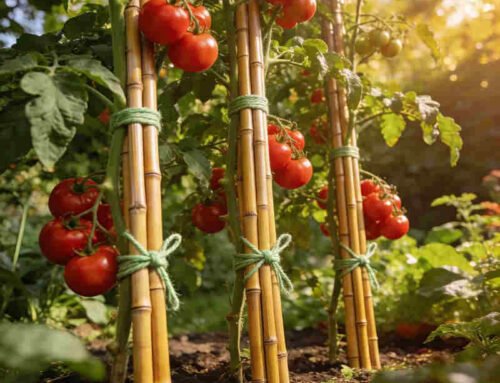
For indeterminate tomato varieties that continue growing throughout the season, single bamboo stakes driven 12-18 inches into the ground provide stable support for plants that may reach 6-8 feet tall. Secure the main stem to the pole with soft ties at 8-10 inch intervals as the plant grows, being careful not to constrict the stem.
For climbing plants like peas, beans, or cucumbers, bamboo provides the vertical support these varieties need to thrive. These plants evolved with natural climbing habits, and providing proper support can increase yields by 30-50% compared to allowing them to sprawl on the ground. The rough texture of bamboo’s natural surface gives plant tendrils excellent grip points for secure attachment.
2.Garden Fencing and Decorative Borders
Create natural-looking boundaries by hammering bamboo poles into the ground to form fences that keep pests out while adding aesthetic appeal. Space poles 4-6 inches apart for a dense barrier that discourages rabbits and larger pests, or space them wider (8-12 inches) for a more open, decorative appearance that defines spaces without creating visual barriers.
Bamboo borders around flower beds or vegetable patches provide tidy divisions between garden areas with a distinctly organic appearance. Cut poles to uniform heights for formal gardens, or vary heights for a more naturalistic look that mimics bamboo’s growth patterns in nature. Horizontal bamboo pieces can be lashed between vertical poles to create traditional picket-style fencing with natural materials.
3.Raised Garden Bed Frames
Join bamboo poles together to construct frames for raised beds, which improve drainage and make gardening easier on your back. Heavy duty bamboo poles work particularly well for structural applications requiring additional weight-bearing capacity. Use poles with diameters of 1.5-2 inches for corner posts and structural elements, connecting them with either bamboo lashing techniques or corrosion-resistant screws for modern convenience.
For a simple 4×8 foot raised bed, you’ll need four corner posts (2-inch diameter, 24 inches long) and eight side pieces (1.5-inch diameter, 48 inches for long sides and 24 inches for short sides). Bury corner posts 8-10 inches deep for stability, then attach side pieces using either traditional lashing or modern fasteners. The natural drainage properties of bamboo help regulate moisture within the bed while the elevated design reduces soil compaction and improves accessibility.
4.Vertical Gardening Structures
In small gardens or urban spaces, bamboo poles enable space-saving vertical growing systems. Build simple trellises, grids, towers, or single stanchions to support plants that grow upward rather than outward, maximizing limited garden real estate. Vertical gardening can increase productive growing area by 300-400% in constrained spaces, transforming balconies, patios, and small yards into productive food gardens.
Construct an A-frame trellis by leaning two bamboo grids against each other, creating a self-supporting structure perfect for growing beans or cucumbers on both sides. This design requires no wall or fence for support and can be positioned anywhere in your garden, relocated as needed, and stored flat during winter months.
5.Shade Structures and Arbors
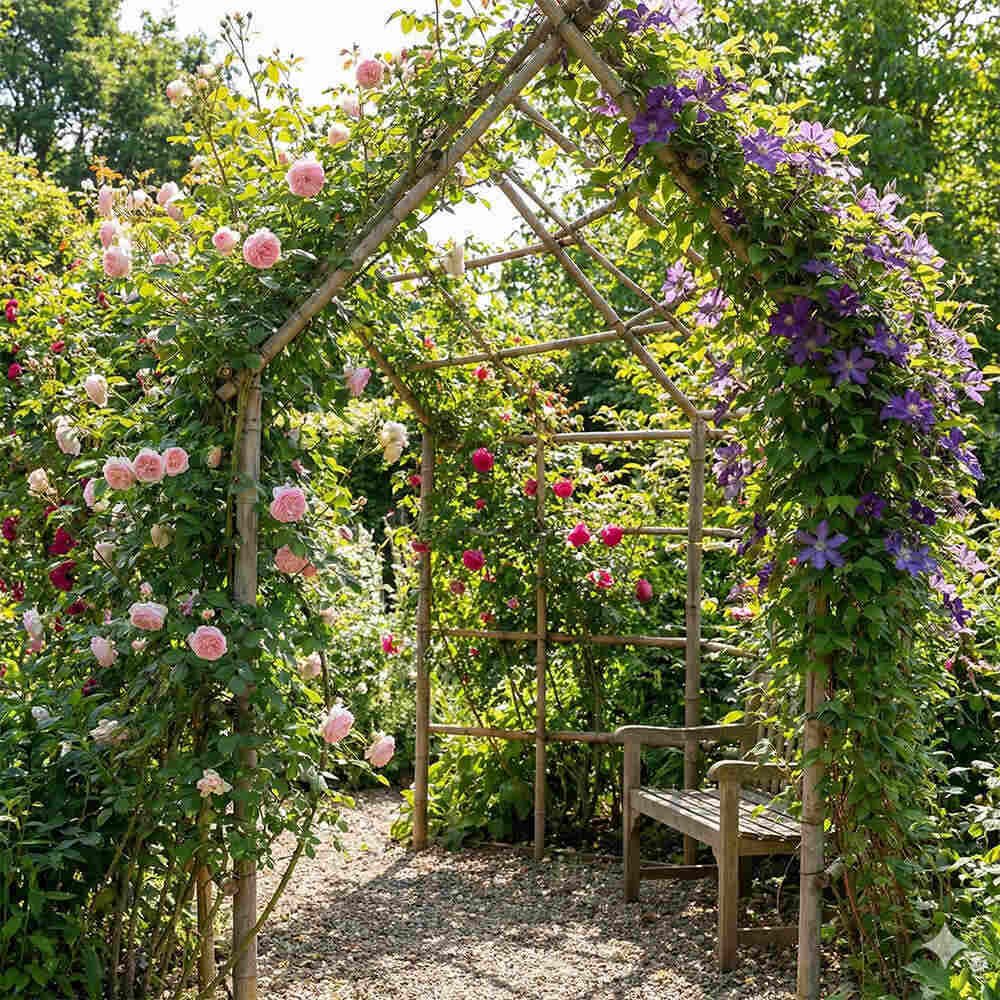
Thick bamboo poles can be fashioned into arbors or shade structures that protect delicate plants from intense sunlight while creating beautiful focal points in your landscape. Design simple overhead frameworks using 2-3 inch diameter poles for structural posts and 1-1.5 inch poles for crossbeams. Cover with shade cloth, climbing vines, or leave open for dappled shade that reduces heat stress on sensitive plants during peak summer months.
Garden arbors constructed from bamboo create enchanting walkways when covered with flowering vines like clematis, morning glories, or climbing roses. The natural color and texture of bamboo complement virtually any garden style, from cottage gardens to contemporary landscapes.
6.Teepee Structures for Pole Beans
One of the most popular and productive bamboo pole applications is the classic bean teepee. This simple structure provides support for pole beans, scarlet runner beans, or even flowering vines while creating an attractive vertical accent in vegetable gardens. Children particularly love bean teepees, as the structure creates a living playhouse as plants mature.
To construct a teepee, arrange 5-7 bamboo poles in a circle approximately 4-5 feet in diameter, pushing each pole 8-12 inches into the soil. Gather poles together at the top (leaving about 6 inches from the ends) and secure with strong twine, wire, or zip ties. Plant 3-4 bean seeds at the base of each pole, and within weeks you’ll have a productive, beautiful garden feature.
7.Staking Individual Plants
Beyond elaborate structures, bamboo poles serve perfectly as simple individual stakes for plants needing moderate support. Dahlias, delphiniums, hollyhocks, sunflowers, and other tall flowering plants benefit from bamboo stakes that prevent wind damage and keep blooms upright and visible. Insert stakes at planting time to avoid damaging roots later, positioning them 2-3 inches from the plant’s base.
8.Marking Garden Rows and Planting Guides
Small bamboo stakes make excellent row markers and planting guides. Use short sections (12-18 inches) to mark where you’ve planted seeds, especially useful for slow-germinating crops like carrots or parsnips where weeds may emerge before crops. Attach waterproof labels to create a organized, professional-looking garden layout.
9.Creating Windbreaks and Plant Screens
In exposed gardens, construct temporary windbreaks by creating bamboo fence sections that reduce wind velocity and protect young transplants. Position screens perpendicular to prevailing winds, spacing them appropriately to create protected microclimates where tender plants can establish without wind damage.
10.Garden Art and Decorative Features
Beyond functional applications, bamboo poles provide excellent material for garden art projects. Create geometric sculptures, border edging, pathway markers, or decorative focal points using bamboo’s clean lines and natural beauty. Paint or stain bamboo for contemporary looks, or embrace its natural weathering for organic, rustic aesthetics.
How to Build a DIY Bamboo Trellis: Step-by-Step Tutorial
Materials Needed
For a basic bamboo trellis, gather 5-7 bamboo poles (¾–1½ inches diameter), lashing cord or jute twine, and basic tools like scissors. Choose poles that are straight, free from cracks or splits, and approximately the same diameter for uniform appearance and structural consistency.
Additional recommended materials include:
| Item | Quantity | Size / Specs | Purpose |
|---|---|---|---|
| Bamboo Poles (Vertical) | 4 - 6 pcs | Length: 6-8 ft (1.8-2.4m) | Main structural supports (legs) of the trellis. |
| Diameter: 1-1.5 inch | |||
| Bamboo Poles (Horizontal) | 6 - 8 pcs | Length: 3-4 ft (0.9-1.2m) | Crossbars for stability and plant climbing. |
| Diameter: 0.5-0.8 inch | |||
| Lashing Cord / Twine | 1 roll | Material: Natural Jute or Nylon | For securing joints using lashing knots. |
| Length: ~100 ft (30m) | |||
| Garden Netting (Optional) | 1 pc | Size: Fits frame (e.g., 5x8 ft) | Adds extra climbing space for vines like beans/peas. |
| Mesh: 4-6 inch squares | |||
| Rubber Mallet | 1 pc | Standard size | For driving poles into the ground without splitting them. |
| Hand Saw | 1 pc | Fine-tooth saw | To cut bamboo poles to desired lengths. |
| Measuring Tape | 1 pc | 10 ft / 3m | Ensuring even spacing of crossbars. |
| Zip Ties (Optional) | 1 pack | UV Resistant, 8-inch | Quick temporary hold before lashing. |
| Wood Preservative (Optional) | 1 can | Outdoor / Eco-friendly | Extends the life of bamboo, especially parts in soil. |
Construction Process
Planning and placement: Select a location with appropriate drainage, as bamboo structures perform poorly in swampy areas. Evaluate sun exposure to ensure your trellis placement matches the light requirements of plants you intend to support. Consider proximity to water sources for convenient irrigation and accessibility for harvesting.
Bury the trellis base 12 inches deep for stability, particularly important in areas with strong winds or for supporting heavy fruiting crops. Mark pole positions before digging to ensure proper spacing and alignment.
Creating the frame: For a simple tri-pod design, place bamboo poles in a triangular shape about 2 feet apart and sink them firmly into the ground. Gather poles together approximately 1 foot from the top. This three-point design provides excellent stability while using minimal materials.
For flat trellis designs against walls or fences, space vertical poles 18-24 inches apart, ensuring all poles are vertical using a level. This spacing provides adequate support while allowing sufficient space between climbing plants for air circulation and light penetration.
Securing joints: Cut a 12-foot piece of twine and tie one end around a pole. Wrap the twine around all three poles 8 times, pulling tight with each lap, then wrap the twine around itself between each pole for additional stability. This traditional lashing technique creates incredibly strong connections without hardware.
For permanent installations, consider using corrosion-resistant screws or bolts, pre-drilling holes to prevent splitting. While less traditional, modern fasteners can extend structure longevity and simplify construction for those unfamiliar with lashing techniques.
Adding horizontal supports: Tie horizontal bamboo pieces every 8-10 inches, using figure-eight lashing to hug the poles securely. Angle rungs slightly upward to catch plant tendrils more effectively. The figure-eight pattern creates friction that prevents horizontal pieces from sliding down vertical supports over time.
For bean or pea trellises, string natural fiber twine vertically between horizontal supports, creating a web that gives delicate tendrils additional attachment points. Replace twine annually, as it will degrade over the growing season.
Finishing touches: Trim any protruding bamboo ends flush with main structures for clean appearance and safety. If desired, apply wood preservative to cut ends to prevent moisture infiltration and extend trellis lifespan. Stand back and evaluate your work, making adjustments before plants establish to avoid disturbing root systems later.
Safety notes
- Wear work gloves, long sleeves, and safety glasses; bamboo can splinter sharply during handling and cutting.
- Inspect poles before use; discard bamboo with deep cracks, mold, soft/rotted ends, or severe insect holes.
- Cut bamboo on a stable surface; clamp it if possible, and keep hands away from the blade path.
- Use a fine-tooth saw; cut slowly to reduce splitting, and sand/trim sharp edges after cutting.
- When hammering poles into soil, use a rubber mallet; avoid striking bamboo directly with a metal hammer to prevent sudden splits.
- Check underground hazards before driving stakes (irrigation lines, cables, edging, buried pipes).
- Don’t force poles into rocky ground; pre-make a pilot hole with a metal rod or use a post-hole tool to reduce impact injuries and splitting.
- Build for stability: keep the frame symmetrical, tighten lashings, and re-check knots after 24–48 hours (rope can stretch).
- Avoid overhead loads unless the structure is engineered; bamboo trellises are for plants, not for people to lean/sit/climb on.
- Keep the work area clear; store tools safely and collect offcuts immediately to prevent trips and punctures.
- Use ladders carefully for tall trellises; maintain three points of contact and avoid working alone for large installs.
- Weather caution: don’t install during strong winds or thunderstorms; wet ground can reduce anchoring strength.
- If using preservatives/oils/finishes, choose outdoor-safe products, follow label ventilation and curing rules, and keep chemicals away from edible plant parts and soil contact until fully cured.
- Keep kids and pets away during cutting, drilling, and hammering; splinters and offcuts are common injury sources.
- Maintenance safety: re-tighten lashings, replace damaged poles promptly, and remove unstable structures before extreme weather.
Choosing the Right Bamboo Pole Size for Different Garden Applications
Understanding Bamboo Pole Specifications
Bamboo poles are typically classified by diameter, length, and wall thickness. Understanding these specifications helps you select appropriate materials for your specific projects and choose the best bamboo poles for garden.
Size Guide by Use Case
Thick bamboo poles (1.5-2 inches diameter): It is large bamboo poles for garden.Ideal for structural applications like arbors, heavy-duty trellises, and permanent garden frameworks. These poles provide load-bearing capacity necessary for overhead structures and installations expected to support significant weight over multiple seasons. Use thick poles for corner posts in raised beds, arbor uprights, and shade structure frames.
Medium bamboo poles (1-1.5 inches diameter): Perfect for vegetable support, raised bed frames, and standard garden trellises. This versatile size range handles most common gardening applications while remaining affordable and easy to work with. Medium poles work well for tomato stakes, bean teepees, and general-purpose trellis construction.
Thin bamboo poles (0.5-1 inch diameter): Best suited for delicate plants, decorative elements, and lightweight climbing supports. Use thin poles for flower supports, row markers, and situations where visual delicacy is important. These poles cost less and work well for temporary or seasonal structures.
Wall Thickness Considerations
Look for bamboo poles with thicker walls, as these varieties last longer untreated and provide superior strength. Wall thickness varies by bamboo species, with some varieties offering walls up to ½ inch thick despite modest external diameters. Thick-walled bamboo resists splitting, handles greater loads, and accepts fasteners more securely than thin-walled varieties.
How to Preserve and Treat Bamboo Poles for Outdoor Use
Understanding Bamboo’s Natural Protection
Fresh bamboo arrives with a waxy exterior coating that provides initial protection but creates a barrier to preservatives. This natural coating must weather away before treatment becomes effective—typically 3-6 months depending on climate conditions. Understanding this timeline helps you plan projects appropriately, either allowing weathering time before preservative application or accepting that fresh bamboo will require treatment after its first season outdoors.
Testing Readiness for Treatment
Place a few drops of water on the bamboo surface. If the water beads up, the natural coating remains intact. When water begins to absorb, your bamboo is ready for preservative application. This simple test takes seconds and prevents wasted effort applying preservatives to sealed surfaces where they cannot penetrate.
Preservation Methods
Keep bamboo elevated: The most effective preservation method is keeping poles out of direct soil contact, which dramatically extends their lifespan. Soil moisture accelerates decomposition, and ground-dwelling insects more readily access bamboo in direct earth contact. Use stone or concrete bases to support bamboo structures, or insert poles into gravel-filled holes for drainage while maintaining stability.
Apply protective coatings: Once the waxy coating has weathered away, apply a clear or colored wood preservative that protects against water damage, UV rays, and mildew. Choose preservatives specifically formulated for outdoor use, avoiding treatments containing chemicals harmful to plants or soil organisms. Apply preservatives on dry, warm days for best penetration and curing.
Reapply protective coatings every 1-2 years, or whenever bamboo appears dry or begins showing signs of weathering. Multiple thin coats provide better protection than single heavy applications, which may peel or flake over time.
Borax treatment: For maximum preservation, soak bamboo poles in a borax solution for several hours to several days, depending on solution temperature. After treatment, allow bamboo to dry completely before use. Borax treatment penetrates bamboo’s cellular structure, providing protection against insects, fungi, and decay organisms from within.
To create borax solution, dissolve 1 pound of borax and 1 pound of boric acid in 5 gallons of warm water. Submerge bamboo completely, weighting poles if necessary to prevent floating. Longer soaking times (3-7 days) provide better protection, particularly for thick-walled poles where preservative must penetrate deeper.
Linseed oil treatment: Natural linseed oil provides water-resistant coating while allowing bamboo to breathe, reducing trapped moisture that promotes decay. Apply multiple thin coats, allowing each to dry completely before adding the next. Linseed oil darkens bamboo’s natural color to rich amber tones many gardeners prefer.
Expected Lifespan
Without treatment, bamboo poles may decay within one year, though some varieties last 4-6 years depending on thickness and environmental conditions. Proper treatment and maintenance can significantly extend this timeframe, with some well-maintained bamboo structures remaining serviceable for a decade or more. Climate plays a significant role, with bamboo lasting longer in dry climates than humid, wet environments where decay organisms thrive.
Bamboo Poles for Garden Trellis: Specialized Applications
Supporting Tomatoes and Heavy Fruiting Plants
For tomato plants and other heavy producers, use medium to thick bamboo poles driven at least 12 inches into the ground. The flexibility of bamboo allows it to sway with wind and plant weight without snapping, unlike rigid metal stakes. Indeterminate tomato varieties can produce 20-30 pounds of fruit per plant, creating substantial weight that inferior supports cannot handle,so should choose heavy duty bamboo poles for garden.
Secure tomato plants using soft ties made from fabric strips, velcro straps, or specialized plant tape that won’t cut into stems as they grow and thicken. Tie loosely, creating a figure-eight pattern between pole and stem that allows movement without constriction. Check ties monthly and adjust as needed throughout the growing season.
Creating Cucumber and Bean Towers
Vertical bamboo structures maximize harvest from minimal space, perfect for pole beans and vining cucumbers. These towers can produce significantly more yield per square foot than traditional row planting. A single 4-foot diameter bean teepee can produce 20-30 pounds of beans from just 12 square feet of garden space, while the same varieties grown horizontally might require 40-50 square feet for comparable yields.
Cucumber towers work particularly well in small gardens, keeping fruit clean and visible for easy harvesting while reducing disease pressure from soil contact. Construct towers by driving four bamboo poles in a square pattern (18-24 inches apart), then wrapping the perimeter with sturdy twine or netting every 6-8 inches vertically. Plant 2-3 cucumber plants at the base of each pole for productive, space-efficient growing.
Pea Trellis Systems
Peas require support but produce lighter weight than beans or tomatoes, making them perfect for delicate bamboo trellis systems. Create simple flat trellises by positioning bamboo poles vertically every 3-4 feet and stringing netting or twine between them. Peas climb readily on such structures, and the vertical orientation makes harvesting easier while improving air circulation that reduces powdery mildew.
Frequently Asked Questions
How long do bamboo poles last in the garden?
With proper treatment and elevation from soil contact, bamboo poles can last 4-6 years outdoors. Untreated poles in ground contact may deteriorate within 1-2 years. Actual lifespan varies based on bamboo species, climate conditions, and maintenance practices. Bamboo in dry climates with seasonal use often lasts longer than poles in constantly wet environments.
Can you cut bamboo poles to custom sizes?
Yes, bamboo poles can be easily cut to size using a hand saw or sharp cutting tool. Cut at an angle to facilitate water runoff and prevent rot at cut ends. Make cuts just above nodes (the solid rings along bamboo’s length) when possible, as these sections are naturally sealed and less susceptible to water infiltration. Seal cut ends with wood preservative or paint to further extend lifespan.
What’s better for plant support: bamboo or metal stakes?
Bamboo offers superior flexibility, environmental sustainability, and natural aesthetics compared to metal stakes. Metal lasts longer but conducts heat, can rust, and lacks bamboo’s eco-friendly profile. Metal stakes can also damage plant tissues during windy conditions when rigid supports rub against stems, while bamboo’s flexibility reduces this risk. However, metal stakes work better in permanent applications or where maximum longevity justifies higher initial cost.
Where to buy bamboo poles for garden?
Are you talking about bamboo poles for sale?Quality bamboo poles are available from garden centers, specialty bamboo suppliers, and online retailers. When purchasing, examine poles for cracks, excessive taper, and signs of insect damage. Buy from suppliers who source responsibly harvested bamboo and can provide information about species and origin. Purchasing directly from bamboo specialty suppliers often provides better selection of sizes and grades than general garden centers.
Can I harvest bamboo from my own garden?
If you grow bamboo, you can harvest poles for garden projects once culms (stems) reach 3-4 years of age. Younger bamboo lacks the strength and durability needed for most applications. Harvest during dry seasons when sap content is lowest, and allow cut poles to cure for several weeks before use. Remove branches and leaves, and cut poles to desired lengths while marking the year of harvest to track age and performance.
Is bamboo safe for organic gardens?
Untreated bamboo is completely safe for organic gardens, as it’s a natural material that biodegrades without releasing harmful chemicals. If applying preservatives, choose products certified for organic use, such as natural oils or borax-based treatments. Avoid pressure-treated bamboo or poles treated with synthetic fungicides that might leach into soil and contaminate organic growing areas.
What’s the difference between bamboo poles and bamboo stakes?
The terms are often used interchangeably, though “stakes” typically refers to smaller diameter poles (½-1 inch) used for individual plant support, while “poles” suggests larger diameter materials (1-3 inches) used for structural applications. Functionally, both are bamboo culms cut to length, and the distinction is more about application than inherent product differences.
Transform Your Garden with Sustainable Bamboo Solutions
Bamboo poles represent the perfect intersection of functionality, sustainability, and affordability for modern gardeners. Whether you’re building elaborate trellises for climbing vegetables, creating decorative garden borders, or constructing vertical growing systems for small spaces, bamboo provides the versatility and strength your garden needs.
By incorporating bamboo poles into your gardening projects, you’re not only choosing a practical solution but also supporting environmentally responsible practices that reduce plastic waste and carbon footprint. Start with a simple project like a tomato trellis or pea tri-pod, and discover why gardeners have relied on bamboo for centuries as nature’s perfect building material.
The satisfaction of growing food and flowers on structures you’ve built yourself adds immeasurable value to the gardening experience. Bamboo’s forgiving nature makes it ideal for first-time builders, while its versatility challenges experienced gardeners to create increasingly sophisticated structures. As you develop skills working with bamboo, you’ll discover countless applications beyond basic plant support, from garden furniture to decorative accents that personalize your outdoor spaces.
Getting Started with Your First Bamboo Garden Project
Begin your bamboo gardening journey by assessing your immediate needs. Do you have tomatoes requiring support? Are climbing beans part of this season’s garden plan? Identifying specific requirements helps you select appropriate bamboo sizes and quantities while keeping initial projects manageable and encouraging.
Purchase 10-15% more bamboo than calculations suggest you’ll need, accounting for imperfect poles, mistakes during construction, and future repairs. Store extra bamboo in a dry, covered location where it will remain useful for years, available for repairs or new projects as your confidence grows.
Most importantly, embrace experimentation. Bamboo’s affordability makes it ideal for trial and error, and structures that don’t work perfectly this season can be modified or rebuilt next year with minimal investment. The knowledge gained through hands-on experience far exceeds anything written instructions can provide, and each season’s projects will improve on previous efforts.
Welcome to the rewarding world of bamboo gardening, where sustainability meets practicality, and beautiful, productive gardens grow upward on nature’s most versatile building material.

Leave A Comment