
Custom bamboo boxes bring together material warmth, practical protection, and a distinctive unboxing experience. For brands, retailers, gift companies, and product makers, a well-designed bamboo box is more than a container: it can become part of the product itself. The grain, color, weight, closure, interior layout, and branded details all influence how a customer perceives the item inside.
Bamboo is especially appealing when a project calls for a natural-looking rigid box with the ability to be shaped around a specific product. A tea company may need a divided presentation box for several tins. A jewelry brand may need a compact case with a soft insert and a precise place for each piece. A cosmetics business may need a durable reusable box that turns ordinary packaging into a keepsake. A corporate gifting team may need a presentation case that carries a logo without looking overly promotional.
The value of custom bamboo boxes lies in that flexibility. The box can be designed around the product, the user, the sales environment, and the story the brand wants to tell. This guide explains the decisions behind a successful project, from box construction and lid styles to branding methods, inserts, finishes, sampling, quality checks, and bulk ordering.
Why Custom Bamboo Boxes Make a Strong Impression
Packaging often introduces a product before the product is touched. A bamboo box immediately communicates material presence. Unlike a lightweight folding carton, it has structure, texture, and a sense of permanence. It can make a small item feel considered and valuable, while also giving the recipient something useful after the original product has been removed.
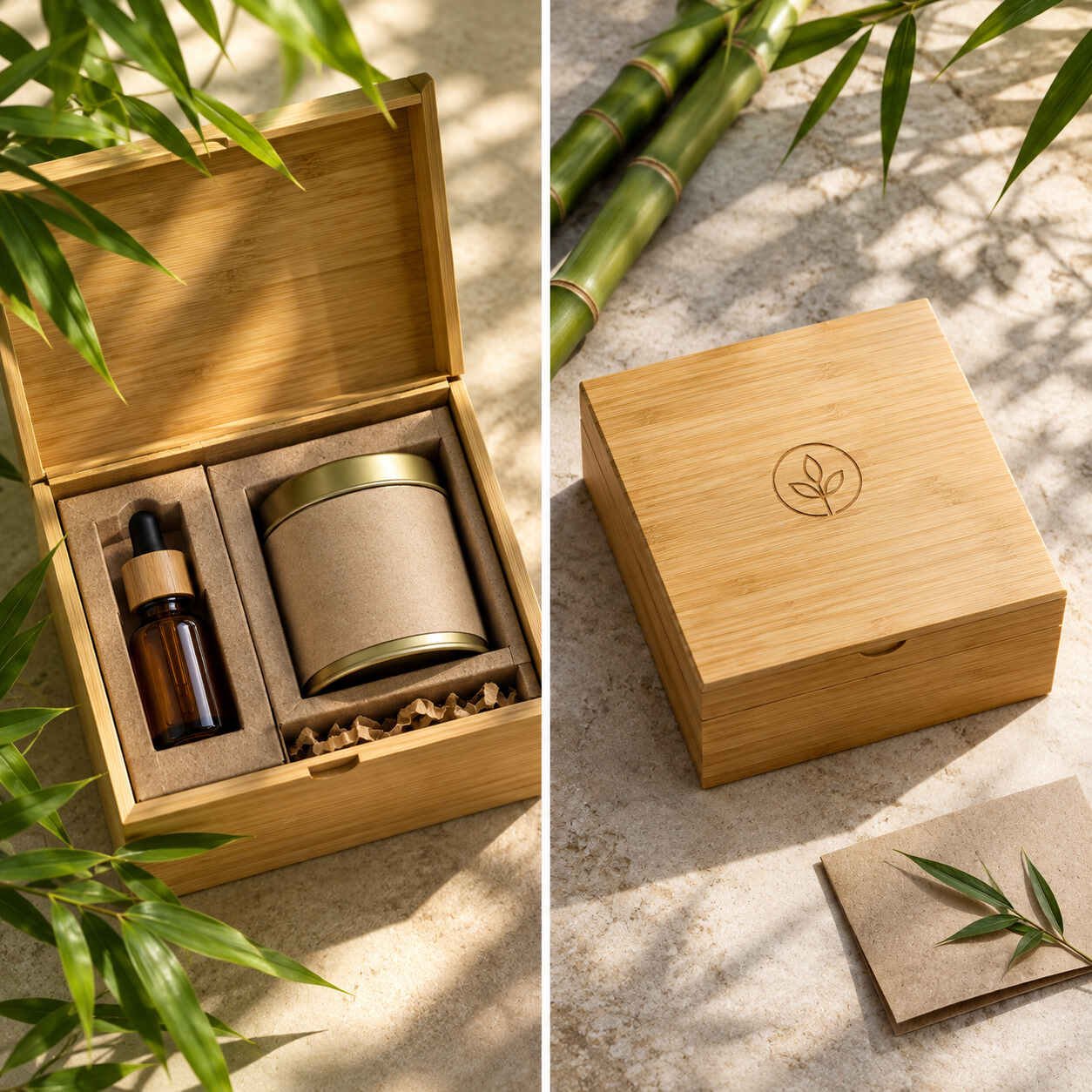
The appeal is not limited to luxury goods. Custom bamboo boxes can work for artisan foods, wellness products, home goods, electronics accessories, promotional sets, subscription gifts, and retail display kits. What changes is the design language. A premium watch box may use a deep carbonized tone, a magnetic closure, and a velvet-lined insert. A natural skincare box may use a clear matte finish, a simple laser-engraved mark, and molded pulp or paperboard dividers. A tea gift set may feature a sliding lid, individual compartments, and small printed product cards.
Natural Character Without Identical Repetition
Bamboo has visual variation. Grain direction, node marks, and tone can differ from panel to panel, particularly when the surface uses real bamboo strips or laminated bamboo components. This variation is often a strength rather than a flaw. It helps make the box feel less generic and more tactile.
At the same time, a custom project should define what variation is acceptable. A brand that wants a light, clean look may prefer carefully selected panels and a consistent natural finish. A brand that wants a richer tone may specify carbonization or a darker stain. A supplier should agree on a physical reference sample or a written finish standard before mass production begins. That reference becomes the basis for reviewing color, grain appearance, printing position, lid fit, and overall workmanship.
A Reusable Packaging Format
Many recipients keep a bamboo box. It may later hold jewelry, tea bags, stationery, cables, small tools, keepsakes, cosmetics, or desk accessories. Reuse matters because it extends the life of the packaging and keeps the brand visible in a personal space long after the first purchase.
A reusable design begins with practical questions. Is the box easy to open? Does it feel substantial enough to keep? Can the insert be removed so the empty box has another purpose? Is the outer surface comfortable to touch and easy to wipe clean? Does the logo remain attractive when the box becomes a storage object rather than product packaging? These questions turn a one-time package into a durable brand object.
Design Freedom Around the Product
Custom bamboo boxes can be developed in square, rectangular, round, oval, book-style, drawer-style, hinged, and lidded formats. They can be shallow for jewelry or deep for bottles and gift assortments. They can contain a single product or a carefully divided group of products. The outer box and the internal organization should be planned together rather than as separate decisions.
A box that is too large can make a product look lost. A box that is too tight can be difficult to pack and may create abrasion during shipment. The best dimensions account for product tolerances, insert compression, easy removal, and a sensible amount of visual breathing room around the item.
Choosing the Right Bamboo Box Construction
The phrase “bamboo box” can describe several types of construction. The exact material and process influence appearance, strength, cost, lead time, and the level of customization available. Before reviewing a quotation, it is useful to understand the main options.
Solid Bamboo and Laminated Bamboo Panels
Many rigid bamboo boxes are made from laminated bamboo panels. Narrow bamboo strips are processed, bonded, and pressed into stable boards that can be cut, sanded, routed, drilled, and assembled into box components. This approach provides good structural consistency while preserving the recognizable bamboo appearance.
The panel grade, strip arrangement, adhesive system, thickness, and finishing process affect the final result. A fine, even strip pattern may suit a modern cosmetics or technology brand. A broader, more expressive grain may suit a tea, home, or artisan gift concept. The right choice depends on the visual identity, not merely on whether the material is technically bamboo.
Solid-feeling bamboo construction is generally suitable for gift boxes, storage boxes, tea boxes, bamboo jewelry boxes, bottle cases, and retail display packaging. It can support hinges, magnets, metal clasps, and decorative hardware when the design is engineered appropriately.
Bamboo Veneer Over Engineered Board
For certain designs, bamboo veneer may be applied to an engineered core. This can provide a bamboo surface while allowing more consistent large panels, special shapes, or a particular cost target. The core material and veneer quality should be disclosed clearly, especially if the project is marketed around material composition.
A veneer construction can be a sensible choice when a box has broad flat panels, an unusual geometry, or a requirement for a very consistent exterior. It can also be useful when the interior needs a painted, printed, or fabric-lined appearance that differs from the outside. However, edge details must be planned carefully so the construction looks intentional and durable.
Woven and Handcrafted Bamboo Styles
Woven bamboo boxes offer a different character. They are often lighter, more artisanal, and more textured than rigid panel boxes. They may suit gift hampers, food packaging, home décor, craft products, and regional or handmade collections. Because woven construction has different dimensional tolerances and moisture behavior, it should be matched to products that do not require highly precise fitted cavities.
The design process for woven styles should include discussion of weave density, edge binding, lid attachment, liner materials, shape consistency, and transport protection. A woven bamboo box can be beautiful, but it should not be treated as a substitute for a rigid protective case when the product inside is fragile or requires exact positioning.
Mixed-Material Construction
Bamboo works well with other materials. Common combinations include bamboo with metal hinges, acrylic windows, leather-like handles, fabric linings, paperboard sleeves, cork pads, silicone fittings, or rigid foam inserts. Mixed materials can make the package more functional, but they also add decisions about compatibility, assembly, repair, and end-of-life separation.
The strongest mixed-material designs use each material for a clear purpose. Bamboo provides the outer structure and tactile identity. A fabric insert protects a delicate item. A metal clasp gives a satisfying closure. A paper sleeve carries detailed product information. When every component has a role, the package feels coherent rather than overdesigned.
Custom Bamboo Boxes With Lids
When selecting custom bamboo boxes with lids, the opening experience should match the product’s purpose. A lift-off lid can create a clean gift presentation, a hinged lid suits products that will be opened repeatedly, and a sliding lid offers a compact, contemporary format for tea, accessories, or stationery. The lid should protect the contents during normal handling while remaining comfortable and intuitive for the customer to open.
The lid determines much of the box’s personality. It affects the first interaction, the perceived value, the protection level, and the manufacturing complexity. Selecting a lid style early helps the project team settle on dimensions, hardware, insert design, and branding placement.
Lift-Off Lids
A lift-off lid is simple, elegant, and adaptable. The lid can sit over the base, fit within an outer rim, or use a shoulder construction that creates a precise visual line when closed. This style is commonly used for gift boxes, tea boxes, confectionery presentation, and sets that are opened occasionally rather than repeatedly throughout the day.
Lift-off lids offer a broad top surface for a logo, artwork, or engraving. They also make it easier to create a clean, uninterrupted exterior. For products that need an especially secure fit, the lid can be designed with a snug inner wall, a ribbon pull, or a small recessed finger notch. If the lid is too tight, however, customers may struggle to open it; if it is too loose, the box can feel low quality. Sampling is essential to find the right balance.
Hinged Lids
A hinged lid creates a familiar presentation-box experience. It can open like a book, remain attached during use, and support repeated opening and closing. Hinged styles are well suited to jewelry, watches, tea assortments, premium accessories, corporate gifts, and display sets.
The hinge type should suit the weight of the lid and the expected number of opening cycles. Small metal hinges are common, but fabric hinges or concealed systems may be used in certain designs. The opening angle also matters. A lid that falls backward may be inconvenient in a retail display. A lid that opens only partially may obstruct product removal. A stop mechanism, ribbon stay, or carefully designed hinge placement can solve these problems.
Sliding Lids
Sliding lids provide a calm, modern interaction. The lid can slide fully out, partially open, or reveal one section at a time. This design is popular for tea, stationery, tools, small electronics, utensils, and minimalist gift sets. It is also useful when a magnetic or hinged lid would make the box too bulky.
A good sliding lid needs smooth movement without rattling. The channels must be accurately made, and finish thickness must be considered because coatings can change the fit. The user should be able to grasp the lid easily, whether through a small finger groove, a cutout, a pull tab, or an overhanging edge.
Magnetic Closures
Magnets can make custom bamboo boxes feel premium and easy to use. They work particularly well with book-style boxes, flip-top lids, and front-opening presentation cases. The magnets should be strong enough to keep the box closed during ordinary handling, but not so strong that opening becomes awkward or causes stress on the hinge or lid panel.
The number, diameter, placement, and polarity of the magnets all need to be tested. Magnets must align precisely. Misalignment can cause a lid to sit unevenly or repel instead of close. When the box will be used near sensitive electronic items, the product team should consider whether magnetic closure is appropriate.
Clasps, Straps, and Other Closures
A metal clasp, elastic strap, leather-like band, or cord tie can create a distinctive look. These options are especially effective for craft-oriented collections, luxury gift sets, and products with a heritage or travel-inspired identity. They can also be helpful when the box needs a more visibly secure closure.
Hardware should be selected for durability and consistency. Check the finish color, edge smoothness, fastener strength, corrosion resistance, and ease of operation. A beautiful clasp that scratches easily or loosens after a few uses can undermine the entire package experience.
Designing the Interior of Custom Bamboo Boxes
The exterior attracts attention, but the interior determines whether the product feels protected and intentionally presented. A thoughtfully designed insert controls movement, creates order, and guides the recipient’s eye toward the items that matter most.
Foam Inserts for Precise Protection
Foam inserts are useful for products that need a close fit, such as glass containers, electronics, tools, fragrances, watches, and delicate accessories. They can be die-cut, routed, or shaped into cavities that hold each item in a defined position. The foam may be covered with fabric, paper, or other materials to improve appearance and touch.
When specifying foam, do not focus only on color. Consider density, recovery, surface feel, odor, cutting precision, and how the product will be removed. An insert that grips an item too tightly can frustrate the customer. An insert that is too soft may allow movement. It is usually best to test the actual product in a sample insert rather than approving a drawing alone.
Fabric-Lined Compartments
Velvet, microfiber, cotton, linen-like fabric, suede-like material, and other textiles can soften the interior of a bamboo box. They are common in jewelry, watches, premium gifts, collectibles, and wellness products. Fabric lining can also conceal structural details and make the package feel quieter and more refined.
Color selection should support the product. Dark interiors can make metallic jewelry stand out, while lighter neutral interiors can reinforce a natural, clean brand identity. Confirm that the fabric will not shed fibers, transfer color, or react with the product surface. If the item has sharp edges, a very delicate lining may not be suitable.
Paperboard and Pulp Dividers
Paperboard partitions are practical for tea, small cosmetics, food items, soaps, candles, and gift assortments. They can create compartments at relatively low weight and can be printed or color-matched to the brand. Molded pulp inserts may also support a more natural presentation, particularly for robust products with irregular shapes.
The main design issue is stability. Dividers should remain upright during shipping and should not collapse when a compartment is empty. If the products are heavy, thin paperboard may be insufficient. A hybrid interior—such as a rigid base tray with paperboard dividers—can provide better performance.
Removable Trays and Layered Presentation
A removable tray is useful when the box contains multiple products or accessories. The top layer can present the hero item, while the lower layer holds instructions, replacement parts, samples, or complementary products. This creates a gradual unboxing experience without making the outer box excessively tall.
Trays should be easy to lift. Ribbon pulls, finger holes, small tabs, or side clearances can make removal intuitive. Consider what the recipient sees at each stage. A branded card, a message, or a printed inner lid can add value without crowding the design.
Custom Compartments for Specific Uses
Custom bamboo tea boxes often use compartments for sachets, loose-leaf tins, scoops, or tasting accessories. Jewelry boxes may include ring rolls, necklace hooks, earring pads, watch cushions, and small removable trays. Cosmetic boxes may have cavities for jars, bottles, applicators, and product cards. Gift boxes may combine several forms of packaging in one organized arrangement.
The most important rule is to design from the actual products outward. Obtain final product dimensions, including caps, labels, protrusions, protective wraps, and tolerances. A box designed from an early product rendering may require expensive changes later if the finished item differs by only a few millimeters.
Branding Options for Bamboo Boxes
Branding on bamboo should enhance the material rather than fight it. The surface already has visual interest, so the most successful marks are usually clear, balanced, and placed with intention. The right branding method depends on logo detail, color requirements, order volume, budget, and the desired mood.
Laser Engraving
Laser engraving is one of the most popular options for custom bamboo boxes. It creates a permanent mark by darkening or removing a fine layer of the surface. The result often feels natural and refined because it works with the material rather than adding a separate printed layer.
Engraving is well suited to text, simple logos, line art, patterns, initials, and serial information. Fine details can be possible, but very small text and highly complex gradients should be tested. The engraved color may vary according to the bamboo tone, grain, moisture content, and finish. A sample should confirm line clarity, mark darkness, and placement before full production.
Screen Printing
Screen printing can add one or more solid colors to a bamboo box. It is useful when a brand requires a specific logo color, a bold graphic, or information that needs stronger contrast than engraving provides. White, black, metallic, and vivid accent colors can work well on a prepared bamboo surface.
Printing on natural materials requires careful surface preparation. Uneven grain or insufficiently smooth coating can affect ink coverage. The supplier should confirm the ink type, adhesion test method, curing process, and acceptable registration tolerance. It is also wise to consider how the print will wear after repeated handling.
UV Printing
UV printing can reproduce detailed artwork, small text, and multi-color designs directly on prepared surfaces. It can be suitable for boxes that need illustrations, photographs, gradients, or complex branding. Because it deposits ink on the surface, it often has a more graphic appearance than engraving.
This method should be used thoughtfully. A full-color design can be effective for cosmetics, promotional kits, or limited-edition gifts, but a heavily printed bamboo box may obscure the material’s natural character. A restrained composition—such as an illustrated lid with plain bamboo sides—often gives the best balance.
Metal Nameplates and Badges
A metal plaque or badge can add weight and contrast. It is often used for premium spirits, executive gifts, watches, specialty tools, and commemorative products. The badge may be etched, embossed, printed, or laser marked, then fixed to the bamboo with pins, screws, or adhesive.
The attachment method matters. Adhesive should be tested for long-term bond strength and temperature variation. Mechanical fixing can look more durable but may require visible hardware or additional assembly. The plate edges should be smooth, and the finish should complement any hinges or clasps used elsewhere on the box.
Debossed or Branded Inserts
Not every brand mark needs to appear on the outer lid. A subtle exterior can be paired with a branded inner lid, a printed message card, a woven label, a leather-like patch, or a custom insert. This approach is useful when the brand wants a more understated, gift-ready exterior.
Interior branding also creates a second moment of discovery. When the recipient opens the box, the message can explain the product, recognize an occasion, share care instructions, or express thanks. It should be concise enough to feel personal rather than promotional.
Surface Finishes and Color Choices
The finish protects the bamboo and determines how it feels in the hand. It also affects color, sheen, engraving behavior, print adhesion, moisture resistance, and the perceived level of quality. Finish decisions should be made early because they influence many other production steps.
Natural Clear Finishes
A clear finish preserves the light color and visible grain of bamboo. It suits brands that want a clean, organic, contemporary look. Depending on the formula and application, the finish may be matte, satin, or gloss.
Matte surfaces feel quiet and modern, but they can show oil marks or handling marks more easily than glossier options. Gloss finishes can provide more visual depth and wipeability, but they may look less natural if overapplied. Satin often provides a balanced middle ground.
Carbonized Bamboo Tones
Carbonization changes the color of bamboo to a deeper, warmer brown. It can create a more mature, luxurious appearance and may pair well with engraved branding, dark interiors, and metal hardware. The exact shade can vary, so physical samples are especially important.
A darker tone can help hide minor marks from everyday use, but it may reduce contrast for certain printed colors. It also changes the visual relationship between the bamboo exterior and the product inside. A pale tea tin or light-colored cosmetic bottle may stand out dramatically against carbonized bamboo, while a dark product might need a lighter insert to remain visible.
Stains and Painted Finishes
Staining can move the bamboo appearance toward a specified color family while retaining some grain visibility. Painting can create an opaque color surface, often used when the brand palette must be highly controlled. Both approaches can be effective, but they change the material expression.
If the bamboo grain is a key part of the desired experience, a transparent or semi-transparent finish is usually preferable. If the project needs a precise brand color, a painted surface may be more reliable. In either case, request color swatches and confirm whether variation between production batches is acceptable.
Protective Coatings
A protective coating may be necessary when boxes will encounter frequent handling, humidity, food contact requirements, or products that can leak or stain. The appropriate coating depends on the intended use. A decorative gift box, a tea box, and a cosmetics box may require different performance standards.
Avoid making unverified claims about food safety, moisture resistance, compostability, or chemical compliance. Instead, identify the actual market, product contact conditions, and applicable documentation needed for the project. If a coating must meet a specific requirement, obtain confirmation from the supplier and preserve the relevant test records.
Custom Bamboo Gift Boxes for Different Industries
Well-designed bamboo packaging boxes can serve very different product categories because their structure and interior can be tailored to the application. A divided tea case, a fabric-lined jewelry box, a fitted fragrance presentation set, and a corporate gift case may all share a bamboo exterior while using entirely different lid systems, inserts, finishes, and protective features. The best approach is to build the packaging around the product’s size, weight, handling needs, and intended customer experience.
A custom bamboo box should be designed around how and where it will be used. The same construction that works for a luxury gift may not work for a humid bathroom environment, a mail-order shipment, or a busy retail shelf. Industry-specific planning avoids a package that looks good in photographs but performs poorly in real life.
Tea, Coffee, and Specialty Food
Tea is a natural fit for bamboo packaging. A bamboo tea box can hold sachets, loose-leaf tins, tea tools, tasting notes, or a small ceramic accessory. Compartment dividers help organize multiple flavors, while a hinged or sliding lid makes everyday access easy.
For food-related projects, clarify whether the product will touch the bamboo directly or remain in sealed internal packaging. Most tea bags, tins, jars, or wrapped foods do not require direct food contact with the box. If direct contact is planned, material selection and coating documentation need closer review.
Coffee gifts, spice sets, confectionery collections, and gourmet hampers can also use bamboo boxes effectively. The interior should account for aroma transfer, product weight, breakage risk, and the fact that many food products are packed in varied shapes. A removable tray or printed product map can help the recipient understand the assortment.
Jewelry and Watches
Custom bamboo jewelry boxes can provide warmth and distinctiveness in a category often dominated by leather-like materials, lacquered wood, or paperboard. The bamboo exterior can be paired with soft fabric interiors, ring slots, necklace hooks, earring cards, or watch cushions.
Protection is central. Jewelry should not rub against hard bamboo surfaces during shipping. Metal items can scratch each other, chains can tangle, and delicate stones may need stable cavities. Use soft-lined holders or pouches where necessary, and test the complete package through expected shipping conditions.
For watches, consider the cushion diameter, strap length, dial protection, and lid clearance. For necklaces, plan secure hooks and sufficient depth so chains remain separated. For earrings, ensure that posts and backs have a protected place. The best jewelry packaging is attractive before and after the item is removed.
Cosmetics, Fragrance, and Wellness Products
Bamboo cosmetic packaging boxes can make wellness and beauty products feel more grounded and giftable. A box may hold a skincare regimen, a perfume bottle, a candle, soaps, bath accessories, or a limited-edition set. The material can reinforce a natural or premium positioning without requiring excessive decoration.
Cosmetics projects must account for product weight and leakage. Glass jars and bottles should not move freely inside the box. An absorbent or protective insert may be appropriate for products with liquid content. Labels should be protected from abrasion, and the box interior should not transfer fibers or color onto light-colored packaging.
Fragrance packaging deserves special attention because bottles can be heavy and fragile. Use a precisely fitted cavity, adequate bottom support, and a transport carton designed to protect the bamboo box itself. The presentation box and shipping box serve different functions; both need to be engineered.
Spirits, Wine, and Premium Beverages
A bamboo box can elevate a bottle gift, a tasting set, or a commemorative beverage release. It may include a bottle cavity, glasses, a corkscrew, tasting notes, or a certificate. The challenge is balancing presentation with weight management.
Bottle boxes must be designed around the full bottle profile, including the neck, closure, foil, and label. The box should prevent side-to-side movement, distribute weight safely, and allow the recipient to remove the bottle without forcing it. Hinges, handles, and clasps should be selected based on the actual loaded weight rather than the empty box alone.
Corporate Gifts and Event Kits
Corporate gifting often benefits from personalization. A bamboo box can include an event logo, recipient name, employee anniversary message, partner recognition, or conference theme. It can hold branded merchandise, stationery, snacks, drinkware, electronics, or handwritten notes.
For event projects, planning time is critical. Recipient lists can change, branding may be finalized late, and individual names may require variable engraving. Build a schedule that accounts for artwork approval, sample confirmation, personalization, packing, and delivery to the final destination. A box that is beautifully made but arrives after the event has little value.
Retail Display and Home Storage
For brands preparing custom bamboo boxes for sale through retail stores or online channels, the box must perform both as presentation packaging and as a durable consumer product. It should sit level on a shelf, withstand ordinary handling, protect the item during delivery, and include any required product information in a way that does not distract from the natural appearance of the bamboo. A reusable design can also give customers an additional reason to keep the box after the original product has been used.
Some custom bamboo boxes are intended to remain on a shelf or countertop. They may display tea, small home goods, beauty products, accessories, or refillable items. In these cases, the package becomes a retail fixture or a storage product.
Design for repeated use. The lid should withstand frequent opening. The base should sit flat. Corners should be smooth. Labels or printed information should be placed where they remain readable. If the box will be sold empty as a storage item, include practical details such as internal dimensions, care guidance, and use suggestions.
How to Develop a Custom Bamboo Box Project
A successful project follows a clear sequence. Rushing directly from an idea to mass production can lead to avoidable problems with fit, color, logo quality, cost, or shipping. A structured process creates room for testing and refinement.
Start With the Product Brief
The brief should describe what the box must accomplish. Include the product type, dimensions, weight, quantity per box, target market, expected sales channel, desired appearance, planned order quantity, and required delivery date. Add photos or samples of the product whenever possible.
The brief should also state what is non-negotiable. Perhaps the box must fit a specific retail shelf height. Perhaps it must carry a bottle and two glasses. Perhaps it must include a recipient name. Perhaps the outer dimensions must stay within a courier pricing threshold. These constraints shape the design more than general style preferences do.
Define the Box Dimensions
Start with the product’s maximum dimensions, not its nominal dimensions. Include labels, caps, handles, protective sleeves, and any expected variation from one production batch to another. Then determine the required clearance around the item.
Clearance depends on the insert and the product. A soft foam cavity may grip the product with slight compression. A paperboard compartment may need several millimeters of space. A glass item may need additional protective material. The outer wall thickness, lid thickness, and hardware also influence the final external size.
For a multi-item set, map the arrangement at full scale. A simple paper mockup can reveal whether the composition feels balanced. It may show that the box should be wider, that a card needs a separate recess, or that the opening direction should change. Small discoveries at this stage prevent expensive tooling or material waste later.
Prepare Artwork Correctly
Logo files should be provided in a suitable vector format whenever possible. This helps maintain sharpness for engraving, printing, and plaque production. Specify the intended logo position, size, and orientation, but remain open to small adjustments recommended by the manufacturer for better readability or production accuracy.
Artwork should include any inside-lid text, labels, patterns, product maps, or instruction cards. If the project uses several branding methods, create a separate artwork file or layer for each one. For example, engraving artwork may need a single-color vector mark, while UV printing may need a full-color file with bleed and color references.
Review a Physical Sample
A digital rendering is useful, but it cannot fully show grain, finish touch, lid fit, engraving depth, or insert performance. A physical sample is the most important approval stage for custom bamboo boxes.
Review the sample with the actual product inside. Open and close it repeatedly. Check whether the product is easy to remove. Examine the logo under different lighting. Look at the underside and interior corners, not only the presentation surfaces. Test the loaded box in the shipping orientation. If the box will be displayed in a store, place it beside the intended retail materials and see whether the design feels coherent.
Record changes in writing. A vague request such as “make it a bit darker” can be interpreted differently by different people. Specify the approved sample, the exact change, and any measurements or visual references that matter.
Approve the Pre-Production Standard
Before bulk production, establish a reference standard. This may include the approved sample, color panels, a finish description, artwork proofs, hardware samples, insert specifications, and packaging instructions. The more complex the box, the more valuable this documentation becomes.
The standard should address reasonable tolerances. Natural materials vary, and handmade or semi-handmade processes may not produce absolute uniformity. What matters is defining the acceptable range for lid alignment, logo placement, color variation, surface marks, and fit. A clear standard helps both buyer and factory evaluate quality fairly.
Buying Custom Bamboo Boxes in Bulk
Businesses sourcing custom bamboo boxes wholesale should evaluate more than the initial unit price. A dependable bulk program begins with a clearly approved sample, a defined material and finish standard, realistic production capacity, and protective export packing. Comparing suppliers on the same specifications—dimensions, lid construction, logo method, interior insert, hardware, and carton packing—makes it easier to assess the real value of a quote and avoid unexpected changes after production starts.
Bulk ordering can improve unit economics, but it also increases the importance of planning. The cost of a bamboo box is influenced by material thickness, dimensions, construction, surface finish, logo method, inserts, hardware, quantity, packing method, and delivery destination. Two boxes that look similar in a photograph can differ substantially in cost and production complexity.
Understanding Minimum Order Quantities
Ordering custom bamboo boxes bulk is most effective when the design is finalized before materials and hardware are committed. Confirm the approved dimensions, finish, logo placement, insert fit, and packing configuration before moving into full production. This reduces the risk of inconsistencies across a large order and helps ensure that every box delivers the same product presentation, from the first carton to the last.
Minimum order quantity, often called MOQ, is not only a sales policy. It reflects the setup required for materials, cutting, printing, tooling, hardware sourcing, and assembly. A simple natural-finish box with one engraved logo may be practical at a lower quantity than a multi-layered presentation case with custom foam, metal plaques, and individual name personalization.
Instead of asking only for the lowest MOQ, explain the project and request quantity breaks. For example, compare pricing at several realistic volumes. This helps identify where setup costs become less significant and whether a larger order materially improves the unit cost. It also prevents a buyer from choosing a quantity that looks inexpensive per unit but creates unnecessary inventory risk.
Building a Useful Quote Request
A quotation request should include as much practical detail as possible. At minimum, provide the intended internal or external dimensions, box style, lid type, finish preference, logo method, insert requirement, estimated quantity, and destination country or port.
It is also helpful to identify what is still open for discussion. If you are choosing between a hinged lid and a sliding lid, say so. If the interior can be foam or paperboard depending on price, explain that. A manufacturer can offer better alternatives when the decision criteria are clear.
Ask whether the quoted price includes assembly, logo setup, sample charges, inner packing, export carton packing, and any special protective materials. A low unit quote can be misleading if important components are excluded.
Sampling and Production Timing
Custom production has stages: design review, sample creation, sample revision if needed, material preparation, component production, finishing, printing or engraving, assembly, inspection, packing, and shipment. Each stage needs time.
The timeline depends on the complexity of the order and the factory’s schedule. Rather than relying on a generic lead-time promise, ask for a production plan tied to the specific design and quantity. Confirm what event triggers the production clock: receipt of deposit, artwork approval, sample approval, or material confirmation. This avoids misunderstandings when a project has a fixed launch date.
Freight and Protective Packing
Bamboo boxes need protective export packaging. The goal is to prevent scratches, corner damage, humidity exposure, lid movement, and insert deformation during transport. Individual tissue, poly bags, paper sleeves, foam wraps, inner cartons, and master cartons may all be used depending on the finish and product value.
The shipping carton must be designed for the loaded weight. A bottle gift box requires a much stronger carton than an empty jewelry box. Carton drop resistance, palletization, moisture protection, and container loading should be considered for larger shipments.
If the finished box will be shipped directly to consumers, test the full fulfillment setup. A presentation box that survives pallet freight may still be damaged in parcel delivery if it is not supported by an appropriate outer shipper.
Quality Checks for Custom Bamboo Boxes
Quality control should be integrated into the project rather than treated as a final inspection only. The best time to catch a problem is before hundreds or thousands of units have been completed.
Appearance and Surface Quality
Inspect the bamboo surface for consistent finish, visible glue residue, scratches, dents, uneven stain, rough edges, and unacceptable color variation. Some grain variation is normal and desirable; the goal is not to make every panel identical, but to ensure the box meets the approved visual standard.
Review corners and joints closely. They should be aligned, filled or finished appropriately, and free from large gaps. The base should sit flat on a level surface. If the box rocks, it can look poorly made and may affect retail display.
Lid Fit and Closure Function
Open and close the box repeatedly. A lift-off lid should seat securely without excessive force. A hinged lid should align correctly and should not bind. A sliding lid should move smoothly. Magnetic closures should meet cleanly. Clasps should fasten and release without catching.
Check the relationship between the lid and the product. In some designs, an interior insert can push against the lid, causing it to sit proud or close unevenly. This may not appear until the box is fully packed, so quality checks should include the actual product or an accurate weight-and-size equivalent.
Logo and Artwork Accuracy
Confirm logo size, position, orientation, color, and clarity against the approved artwork. For engraving, inspect the sharpness of fine lines and the consistency of mark depth or darkness. For printing, inspect coverage, registration, adhesion, and edge cleanliness.
If the project includes individual names or variable data, verify spelling and assignment carefully. Personalization errors are especially costly because they cannot usually be corrected after engraving or printing.
Insert Fit and Product Protection
Test how the actual product sits inside the box. It should not move excessively during normal handling, but it should also be easy for the customer to remove. Check whether labels, delicate surfaces, or accessories rub against the insert or lid.
For multi-item sets, ensure that every component has a defined place. Empty spaces can make a gift box feel incomplete, while cramped spaces can cause damage. If a printed card or instruction leaflet is included, confirm it does not curl, shift, or obscure the product.
Packaging and Carton Integrity
Review individual packing and master cartons before shipment. Verify carton marks, quantities, dimensions, gross weight, and stacking guidance. For fragile or high-value goods, consider a pre-shipment inspection that includes random carton opening, drop testing where appropriate, and verification of product count.
The quality standard should match the commercial reality. A low-volume luxury gift box may justify detailed inspection of every piece. A large wholesale order may use an agreed sampling plan. In either case, define the method before production ends.
Caring for Bamboo Packaging After Purchase
Clear care guidance helps recipients keep bamboo boxes attractive and useful. Bamboo is durable, but like other natural materials, it benefits from sensible handling.
Basic Care Instructions
Wipe the exterior with a soft, dry or slightly damp cloth. Avoid soaking the box or leaving it in standing water. Let it dry naturally if it becomes damp. Do not use harsh solvents or abrasive cleaners unless the specific coating is known to be compatible.
Keep the box away from prolonged direct sunlight, extreme heat, and very humid environments. These conditions can affect color, finish, adhesives, and dimensional stability. A box used to store dry goods, jewelry, tea accessories, or personal items will generally perform best in an ordinary indoor environment.
Maintaining Hinges and Hardware
If the box has metal hardware, keep it dry and clean. Avoid forcing a stiff hinge or clasp. If a hardware issue develops, assess whether the fasteners have loosened, whether the lid is misaligned, or whether the mechanism needs replacement. For premium reusable boxes, replaceable hardware can be a useful design consideration.
Reusing the Box
After the original product has been enjoyed, a bamboo box can be used in many ways. It can organize drawers, hold letters, store cables, present small gifts, display keepsakes, or keep tea and coffee accessories together. A removable insert makes reuse easier, but even a fitted insert may be useful for organizing small objects.
Brands can encourage reuse by including a short message or care card. The tone should be helpful rather than prescriptive: a simple suggestion that the box was made to be kept can add emotional value without making promises that the packaging cannot fulfill.
Frequently Asked Questions
Can I order custom bamboo boxes with my logo?
Yes. Common branding methods include laser engraving, screen printing, UV printing, metal nameplates, and branded interior components. The best method depends on your logo detail, required colors, order quantity, budget, and desired appearance. Always approve a physical sample to confirm the final result on the selected bamboo surface.
What information is needed to request a quote for custom bamboo boxes?
Provide the box dimensions, preferred style, lid type, finish, logo method, interior insert requirements, estimated order quantity, product photos or dimensions, and delivery destination. If some details are undecided, explain your priorities, such as durability, luxury appearance, low weight, or a target budget.
Can custom bamboo boxes include inserts and dividers?
Yes. Options can include foam cavities, fabric-lined trays, paperboard dividers, molded pulp, ring rolls, watch cushions, removable trays, and custom compartments. The insert should be developed using the actual product dimensions so it provides both presentation and protection.
Are custom bamboo boxes suitable for tea and food gifts?
They can be suitable for tea, coffee, confectionery, spices, and other gift assortments, especially when products are separately wrapped, bagged, tinned, or jarred. If food will contact the bamboo directly, discuss the specific application, coating, and documentation requirements with the manufacturer before production.
What lid styles are available for bamboo boxes?
Common options include lift-off lids, hinged lids, sliding lids, magnetic flip-top lids, and boxes with clasps or straps. The choice should reflect how often the box will be opened, the product weight, the desired presentation, and the available branding area.
Can bamboo boxes be made in custom colors?
Yes. Bamboo can use clear natural finishes, carbonized tones, stains, and painted finishes. Keep in mind that natural grain and material variation can influence the final appearance, particularly with transparent finishes. An approved color sample is the best reference for production.
How should I choose between laser engraving and printing?
Choose laser engraving when you want a permanent, natural-looking mark with a refined tactile quality. Choose printing when you need specific brand colors, larger graphics, or complex multi-color artwork. In some designs, a subtle engraved logo on the exterior and printed information inside the lid creates a strong combination.
How long does custom bamboo box production take?
Timing depends on design complexity, sample revisions, quantity, materials, hardware, finish, branding, factory capacity, and shipping method. Request a schedule for your exact project and confirm whether the stated timeline begins after artwork approval, sample approval, deposit, or another milestone.
What factors affect the cost of custom bamboo boxes?
Important factors include box size, bamboo construction, wall thickness, lid style, hardware, surface finish, logo method, insert design, order quantity, protective packing, and freight. The most useful way to compare suppliers is to make sure each quote covers the same specifications and packing requirements.
Can a bamboo box be shipped directly to consumers?
Yes, but the presentation box should be protected by a suitable outer shipping carton and internal cushioning. Test the complete packed system for parcel handling, especially if the box contains glass bottles, delicate accessories, or heavy items.
Are bamboo boxes appropriate for luxury products?
Yes. With precise construction, a high-quality finish, elegant hardware, and a tailored interior, custom bamboo boxes can suit jewelry, watches, fragrance, premium beverages, executive gifts, and limited-edition product sets. The key is to match the design details to the product’s price point and brand personality.
Can the box be reused after the product is removed?
Yes. Reuse is one of the strongest qualities of a well-made bamboo box. Recipients may use it for keepsakes, stationery, jewelry, tea accessories, desk items, or home organization. Removable inserts and durable closures make the box even more useful over time.
Final Thoughts
Custom bamboo boxes work best when they are designed as part of the product experience rather than as an afterthought. Start with the item to be protected, then decide how the recipient should open, discover, remove, and reuse the box. Select construction, lid style, interior, finish, and branding methods that serve that experience.
The most successful designs are not necessarily the most complicated. A simple lift-off bamboo box with a well-fitted insert and a crisp engraved logo can feel more memorable than a crowded package with too many materials and decorative elements. Precision, material honesty, and thoughtful details create the strongest result.
Whether the project is a tea assortment, a custom jewelry presentation case, a beauty gift set, a bottle box, a corporate gift, or a reusable retail container, custom bamboo boxes offer a flexible format for making products feel more personal, considered, and lasting.

Leave A Comment