
Bamboo utensils have become a favorite in many kitchens because they are lightweight, durable, and made from a fast‑growing, renewable resource. They feel warm in the hand, do not scratch non‑stick cookware, and look beautiful on the counter, but they are also more porous than metal or plastic tools.
Those tiny pores in bamboo can absorb water, food residue, and even detergent if you do not clean them correctly. Over time, this can lead to warping, cracking, bad odors, and in the worst case, mold growth on your spoons, spatulas, and chopping boards. With a few simple habits, though, you can keep bamboo utensils clean, safe, and attractive for years instead of months.
What You Need to Clean Bamboo Utensils
Basic daily‑cleaning kit
For everyday cleaning, you only need a short list of gentle tools and products:
- Warm water
- Mild dish soap (fragrance‑free if possible)
- A soft sponge, washcloth, or soft‑bristled brush
- A clean, dry towel or dishcloth
The goal is to remove food residue without scratching the bamboo surface or soaking it for long periods. Avoid metal scrubbers and very abrasive powders; they can roughen the surface so that stains and odors cling more easily in the future.
Deep‑cleaning and deodorizing supplies
When your utensils look dull, feel sticky, or start to smell a little off, natural ingredients can help restore them. Keep these on hand for periodic deep cleaning:
- Baking soda
- White vinegar or rice vinegar
- Fresh lemon juice or lemon slices
- Coarse salt (like kosher salt)
- A small bowl or measuring cup for mixing solutions
These items help dissolve grease, lift stains, and neutralize odors without harsh chemicals that might damage bamboo fibers.
Conditioning and long‑term care items
Because bamboo dries out over time, especially in hot kitchens, it benefits from regular conditioning. For that, you will need:
- Food‑safe mineral oil, coconut oil, or another neutral, food‑grade oil
- A soft cloth or paper towel dedicated to oiling kitchen tools
Some people also like to use specialized cutting board oils or wax blends that combine mineral oil with beeswax for a slightly more protective finish. Whatever you choose, it should be stable, non‑rancid, and clearly labeled as food‑safe.
How to Clean Bamboo Utensils After Each Use
Step‑by‑step daily washing routine
The way you clean bamboo utensils right after cooking has more impact on their lifespan than any deep‑cleaning trick. Follow this simple routine each time you use them:
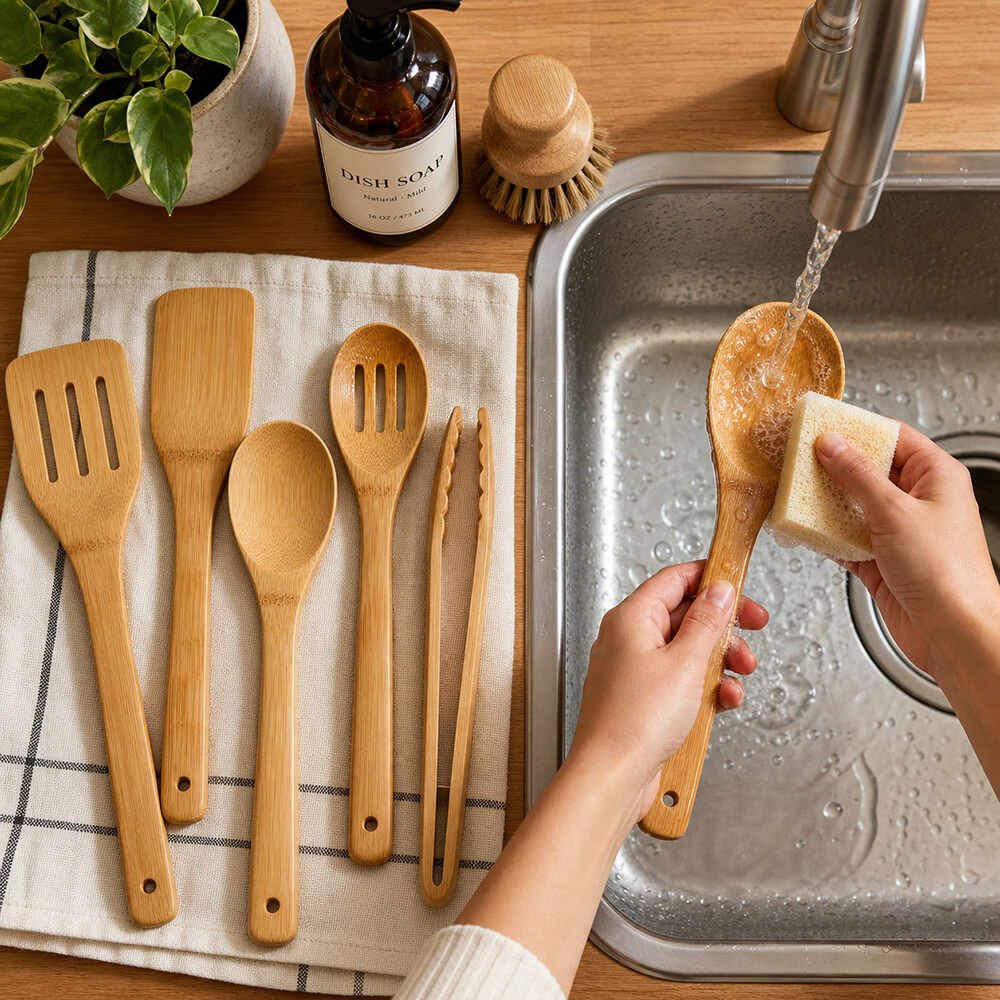
- Rinse immediately.As soon as you are finished cooking, rinse the utensil under warm running water to remove loose food particles before they dry and harden.
- Apply mild soap.Put a small drop of mild dish soap on a soft sponge or cloth, not directly on the utensil, so you do not over‑soap the bamboo.
- Gently scrub.Wipe along the grain of the bamboo, paying attention to areas where food tends to cling, such as the edges of spoons or the flat surfaces of spatulas.
- Rinse thoroughly.Make sure no soap residue remains; feeling any slickness usually means you need another quick rinse.
- Towel‑dry right away.Use a clean, absorbent towel to remove as much surface moisture as possible, especially from handles and thicker areas.
- Air‑dry completely.Stand utensils upright in a jar or lay them on a rack so air can circulate on all sides before you put them into a drawer or utensil holder.
This whole process only takes a couple of minutes but significantly slows down staining, swelling, and odor build‑up. The key is to avoid letting bamboo sit in water or with food residue on it for hours after a meal.
What’s the best way to clean bamboo utensils?
The best way to clean bamboo utensils is to hand‑wash them right after use with warm water and a small amount of mild dish soap. Gently scrub along the grain with a soft sponge or cloth, rinse away all soap, then towel‑dry and let the utensils air‑dry fully in a well‑ventilated spot before storing them. This quick routine removes food residue without soaking the bamboo or exposing it to harsh detergents and high heat.
Can you soak bamboo utensils in water?
You should avoid soaking bamboo utensils in water for more than a few minutes. Because bamboo is porous, long soaks cause the fibers to swell and then shrink as they dry, which leads to warping, cracks, and a rough surface where bacteria can hide. If food is stuck on, briefly soak only the dirty end or use warm running water and gentle scrubbing instead of leaving the whole utensil under water.
Can you wash and reuse bamboo utensils?
Yes, you can wash and reuse bamboo utensils many times, which is one reason they are so popular in eco‑friendly kitchens. As long as you hand‑wash them with mild soap and warm water, dry them completely, and avoid harsh chemicals or extreme heat, bamboo spoons, spatulas, and tongs can serve you for years.
How to Deep‑Clean Bamboo Utensils
Every few weeks, or whenever your utensils look stained or smell less than fresh, give them a deeper cleaning. This process targets oil build‑up, discoloration, and persistent odors from strong ingredients like garlic or curry.
Removing stains and grease
- Make a cleaning paste.Mix baking soda with a little water or lemon juice to form a thin paste.
- Apply to stained areas.Spread the paste onto discolored spots or areas that feel greasy even after normal washing.
- Scrub gently.Use a soft brush or cloth to work the paste along the grain, avoiding aggressive pressure that might scratch the surface.
- Let it sit briefly.Leave the paste on the utensil for 5–10 minutes so it can loosen stains and absorb oils.
- Rinse thoroughly with warm water.Make sure no baking soda remains, as it can leave a gritty feel if not washed away.
- Dry and air‑dry as usual.Towel‑dry, then let the utensils sit in open air until completely dry before putting them away.
Baking soda acts as a mild abrasive and deodorizer, which is strong enough to handle oily residue but gentle enough for bamboo when used sparingly. You can repeat this process on especially stubborn stains, but avoid doing it every day to prevent unnecessary wear.
Deodorizing with vinegar or lemon
If your bamboo spoon smells like onions long after washing, a simple acidic soak can help neutralize the odor.
- Combine one part white or rice vinegar with four parts warm water in a shallow bowl.
- Dip only the working end of the utensil into the solution for about 5–10 minutes, keeping the handle as dry as possible.
- Alternatively, rub the surface with a cut lemon dipped in coarse salt, which helps scrub away residue and leaves a fresh scent.
After deodorizing, rinse thoroughly with plain water and dry as usual. Vinegar and lemon both help kill surface bacteria and reduce smells without relying on harsh bleach or perfumed cleaners that might linger in the wood.
Dealing with light mold or dark spots
Dark spots, especially near the edges or joints of utensils, can be early signs of mildew, moisture damage, or even food pigments. If the spots are shallow and the utensil still feels solid, you can often rescue it:
- Wash the utensil thoroughly with warm water and soap.
- Scrub the spotted area with a mixture of baking soda and a small amount of vinegar, letting the fizz lift surface discoloration.
- Rinse, then set the utensil in direct sunlight for a short period, as sunlight can help dry and lightly disinfect the surface.
If the mold appears deep, fuzzy, or smells musty even after cleaning and drying, it is safer to retire the utensil and replace it. Bamboo is inexpensive compared to health risks, and badly damaged tools will not perform well in the kitchen anyway.
How to Disinfect Bamboo Utensils Safely
When you should disinfect
Daily washing is usually enough for utensils used with cooked foods, but there are times when extra disinfection makes sense:
- After handling raw meat, poultry, or fish
- After a family illness, such as a stomach bug
- When a utensil has been left in a damp sink or under a wet towel
Because bamboo is sensitive to strong chemicals and prolonged moisture, you should choose disinfecting methods that balance safety and material care.
Gentle disinfecting methods
Vinegar and lemon are useful home remedies that help neutralize odors and may reduce some surface microbes on bamboo, but they are not a substitute for thorough cleaning or professional sanitizing methods.
Rinse afterward and dry completely before storing. For an extra step, you can also wipe the surface with a cloth lightly dampened with hydrogen peroxide, but avoid soaking and always rinse so no chemical residue remains.
On clean bamboo utensils, you can lightly mist the surface with 3% hydrogen peroxide or wipe it on with a cloth, making sure the utensil is only damp, not dripping. Let it sit for about 5–10 minutes, then rinse with water and dry completely before storing. This offers an extra layer of everyday sanitizing, but it should complement, not replace, regular washing and safe food‑handling practices.
These vinegar and lemon methods are meant for routine home care of bamboo utensils. For strict disinfection standards in professional or medical settings, always follow local food safety or health guidelines.
The vinegar and hydrogen peroxide methods mentioned here are based on common household cleaning recommendations from food‑safety and home‑care resources and are meant for routine home use only. They can help improve everyday hygiene, but they are not a substitute for following your local food‑safety regulations or professional sanitizing standards in commercial kitchens.
Methods to avoid
Chlorine bleach may be common in some kitchens, but it is too harsh for bamboo and can weaken the fibers over time. Bleach solutions can also strip away finishes and leave a lingering smell that is difficult to remove. Likewise, boiling bamboo utensils in water as a disinfecting shortcut can cause them to warp, split, or become rough to the touch.
Stick to mild, food‑safe disinfectants and short contact times to protect both your health and the durability of your utensils.
Why Bamboo Utensils Do Not Belong in the Dishwasher
Heat, water, and detergent damage
Dishwashers combine sustained hot water, strong detergents, and forceful jets that are hard on natural materials. In that environment, bamboo soaks up more water than it should, while harsh cleaners strip away natural oils and protective coatings. Over repeated cycles, this leads to swelling, cracking, and permanent warping that you cannot fix later.
Even if a piece of bamboo cookware survives a few trips through the dishwasher, micro‑cracks and raised grain often appear, making the utensil uncomfortable to hold and more likely to harbor bacteria. For the longest possible life, all bamboo utensils, boards, and handles should be washed by hand.
“Dishwasher‑safe” labels and what they mean
Some products with bamboo handles or bamboo composites may be marketed as “dishwasher‑safe,” but that usually refers to specific tests rather than lifetime performance. Manufacturers might mean that the item can tolerate occasional dishwasher use without immediately failing, not that it is the best method for long‑term care.
If in doubt, follow the most conservative advice: hand‑wash any utensil with exposed bamboo and dry it thoroughly. This approach keeps the material smoother, safer, and more attractive for much longer than relying on the dishwasher for convenience.
How to Dry and Store Bamboo Utensils
Proper drying technique
After washing, proper drying is as important as the cleaning itself. Always start by patting the utensil dry with a clean towel, removing visible water droplets and moisture around joints or carved details.
Then stand the utensil upright in a jar or place it on a drying rack where air can move freely around it. Avoid leaving bamboo lying flat on a non‑breathable surface, such as the bottom of a sink or a solid countertop, because the underside may stay damp and invite mold growth.
Ideal storage conditions
Bamboo prefers a cool, dry, and well‑ventilated environment. If you store utensils in a drawer, make sure they are completely dry first and that the drawer is not crammed so tightly that air cannot circulate. Utensil crocks next to the stove look stylish but can expose bamboo to constant heat and steam, so try to position them a little away from burners and kettles.
You can also rotate utensils occasionally—using ones at the back of the jar and not just the same spoon every day—to ensure even wear and reduce the chance of one piece suffering from repeated exposure to steam or splatter.
How to Oil and Condition Bamboo Utensils
Why oiling matters
Like wooden boards and spoons, bamboo utensils benefit from periodic oiling to maintain their moisture balance and resistance to stains. A thin layer of food‑safe oil reduces how much water and food residue the bamboo can absorb, protecting it from sudden swelling and shrinking.
Well‑oiled bamboo also looks richer and smoother, giving your kitchen tools a warmer appearance and making them more pleasant to handle. Without conditioning, bamboo can appear dull, feel rough, and develop tiny surface cracks over time.
How often to oil
How often you should oil bamboo utensils depends on how frequently you use and wash them, as well as your local climate. In a humid environment, once every one to two months may be enough, whereas in a hot, dry kitchen you might want to condition them every few weeks.
A simple rule of thumb is to add oil whenever the bamboo looks dry or chalky, water stops beading on the surface, or the utensil starts to feel rough under your fingers. Regular light maintenance is easier and more effective than waiting until serious dryness or cracking appears.
Step‑by‑step oiling guide
- Start with clean, dry utensils.Make sure there is no moisture left on or inside the bamboo before applying oil.
- Choose a food‑safe oil.Mineral oil, fractionated coconut oil, or specialized cutting board oil are popular choices that do not go rancid quickly.
- Apply a small amount.Put a teaspoon or so of oil on a soft cloth, then rub it into the utensil, following the grain from handle to tip.
- Cover all surfaces.Pay extra attention to edges, carved details, or areas that have started to look dry and faded.
- Let it soak in.Rest the utensil on a clean surface for at least 20–30 minutes, or even overnight for very dry pieces.
- Wipe off excess.Buff the utensil with a clean, dry cloth until the surface feels smooth and not greasy.
After oiling, avoid washing the utensil again until you have used it for cooking; this allows the oil to settle into the fibers and provide maximum protection.
Common Mistakes to Avoid
Leaving utensils in water
One of the most damaging habits is leaving bamboo tools in the sink, under a wet sponge, or in a soaking pot “for later”. Even an hour or two of immersion can be enough for water to seep deeply into the fibers, leading to swelling and eventually to cracks as the utensil dries out.
If you cannot wash a utensil right away, at least rinse it under warm water and set it aside to dry until you can clean it properly. This small step prevents most of the long‑term damage that soaking would cause.
Using harsh scrubbers and cleaners
Steel wool, scouring pads, and aggressive chemical cleaners can remove a thin layer of bamboo every time you use them. Over months, this gradually thins the utensil, raises the grain, and makes the surface rough, which in turn traps more dirt and odors.
Stick to soft sponges, cloths, and gentle, biodegradable detergents instead. For stubborn residue, rely on baking soda, salt, and a bit of extra time rather than scratching the utensil with metal tools.
Storing bamboo while still damp
Putting a damp utensil into a closed drawer or crowded container traps moisture around its surface. That warm, humid environment encourages microbial growth and can create darker patches or unpleasant smells, especially near the handle or thicker sections.
Always make sure your utensils are completely dry before storing them, and if you ever notice condensation or a damp feeling in the drawer, remove the items and let them air out before closing it again.
Ignoring early warning signs
Minor discoloration, faint odors, or a slight roughness might not seem serious, but they are early signals that your bamboo utensils need attention. Left alone, these small issues can turn into deep stains, mold growth, or structural cracks that force you to throw the utensil away.
Regularly check your tools while washing; if something looks or smells off, give it a quick deep clean and, if needed, a conditioning treatment. This proactive approach saves money and keeps your kitchen safer.
How Long Can Bamboo Utensils Last?
Typical lifespan with good care
With regular cleaning, proper drying, and periodic conditioning, bamboo utensils can last several years, even in a busy home kitchen. Their natural strength and flexibility mean they can handle daily stirring, scraping, and serving as long as you respect their need to stay reasonably dry.
Over time, you may notice a soft sheen developing on well‑maintained utensils, which is a combination of natural oils from your hands and the food‑safe treatments you apply. Instead of looking worn out, they often develop a pleasantly seasoned appearance similar to a favorite wooden cutting board.
When it is time to replace them
Despite your best efforts, no utensil lasts forever, and bamboo is no exception. You should consider replacing a piece if it:
- Has deep cracks or splits you can feel with your fingernail
- Shows extensive dark or fuzzy mold that does not disappear with cleaning
- Smells bad even after thorough washing and deodorizing
- Feels weak, soft, or splintery in areas that come into contact with food
Retiring an old utensil at the right time keeps your kitchen cleaner and safer, and bamboo’s relatively low cost makes replacement easier on your budget.
What is better, stainless steel or bamboo?
Both stainless steel and bamboo have advantages, so the “better” choice depends on how you cook and what you prioritize. Stainless steel utensils are extremely durable, fully dishwasher‑safe, and ideal for high‑heat cooking, but they can scratch delicate non‑stick pans and feel harsher on cookware surfaces. Bamboo utensils are lighter, quieter, and gentler on non‑stick coatings, and many people prefer them for their natural look and renewable origin, but they require hand‑washing and more careful drying to stay in good condition. Most home cooks find that keeping both materials in the kitchen works best: stainless steel for very high heat and heavy tasks, and bamboo for everyday stirring, flipping, and serving.
Frequently Asked Questions
Can I soak bamboo utensils to loosen dried food?
It is better not to soak bamboo utensils fully in water, even to loosen dried‑on food. Instead, rinse them under warm running water and gently scrape or scrub the residue with a soft tool, keeping soaking time as short as possible.
Are bamboo utensils naturally antibacterial?
Bamboo has some natural resistance to bacterial growth compared with plastics, but that does not mean it cleans itself. You still need to wash, dry, and occasionally disinfect bamboo utensils to keep them safe for food preparation.
Which oils are safe for conditioning bamboo utensils?
Food‑safe mineral oil is a reliable choice because it is stable and does not go rancid quickly. Some people also use fractionated coconut oil or commercial cutting board treatments; avoid ordinary cooking oils like olive or canola, which can become sticky and develop off smells over time.
Can I put bamboo utensils in the microwave to dry or disinfect them?
Microwaving bamboo utensils is not recommended, because rapid heating can dry out the fibers unevenly and cause warping or cracking. Stick to air‑drying, sunlight for short periods, and gentle disinfecting solutions instead.
How can I remove strong garlic or onion smell from bamboo utensils?
Wash the utensil thoroughly, then scrub it with a paste of baking soda and water or lemon juice and let it sit for a few minutes. Rinse well, dry, and if needed, follow up with a brief soak of just the working end in diluted vinegar before drying again.

Leave A Comment