
Bamboo craft has evolved from a traditional village skill into a fast‑growing product category in the modern home and kitchen market. For importers, wholesalers, and brand owners, understanding what sits behind the term “bamboo craft” is the first step to choosing the right suppliers and building a profitable product line.
This article explains what bamboo craft really means today, why demand is rising, which product categories are most promising, and how professional buyers can source reliably from Asia. Instead of just showing DIY ideas and bamboo craft ideas, it looks at bamboo craft from a supply‑chain and manufacturing angle, so you can turn this natural material into real business.
1.What Does “Bamboo Craft” Mean Today?
Traditionally, bamboo craft referred to all kinds of handmade objects woven, carved, or assembled from bamboo culms, including baskets, mats, musical instruments, tools, and household items. In countries such as China, India, Vietnam, and Japan, artisans developed local styles of splitting, bending, and weaving bamboo into daily necessities and ritual items.
In the modern export market, the meaning has become broader. Many items that international buyers call “bamboo crafts” are actually semi‑industrial products: the raw bamboo is processed by machines into boards, veneers, or laminated panels, then cut, sanded, and finished in factories. These products keep the natural look of bamboo but meet today’s requirements for consistent dimensions, smooth finishing, branding, export packaging, and safety certifications.
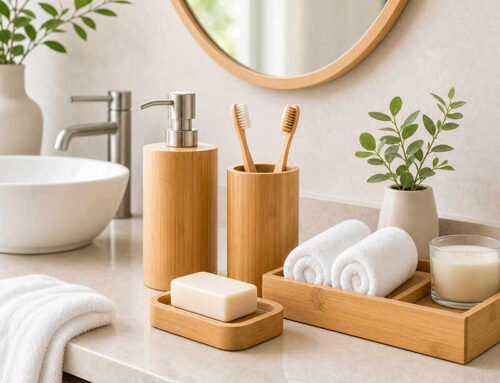
From a B2B sourcing perspective, bamboo craft now overlaps with categories such as bamboo home décor, bamboo home storage, bamboo kitchenware, bamboo tableware, and sustainable gift sets. When you search the keyword “bamboo craft” in Google, you will see that first‑page results are mostly educational or cultural websites, while wholesale and factory pages appear more often for long‑tail phrases like “bamboo craft items,” “bamboo craft ideas wholesale,” or “bamboo handicrafts suppliers.”
2.Why Bamboo Craft Is Attractive for Eco‑Conscious Markets
Many brands and retailers are turning to bamboo craft because it fits perfectly with the global trend toward sustainable and plastic‑free lifestyles. Bamboo is one of the fastest‑growing plants in the world, and many species can be harvested within three to five years, which is much quicker than hardwood trees.
From a carbon‑footprint perspective, bamboo plantations absorb significant amounts of CO₂ and help stabilize soil, which appeals to environmentally minded consumers and corporate social responsibility teams. At the product level, bamboo craft items give a warm, natural aesthetic that matches popular interior styles such as Scandinavian, Japandi, and modern tropical.
For buyers, bamboo craft offers three practical advantages.
- It provides a renewable alternative to plastic or tropical hardwood, which helps retailers meet sustainability commitments.
- It often has a higher perceived value than plastic, allowing better margins even at similar or slightly higher price points.
- It allows strong branding opportunities because surfaces can be engraved, printed, or combined with other materials like cotton, glass, or stainless steel.
However, to unlock these advantages you must work with factories that understand both traditional craft and modern quality standards, not just small workshops making irregular handmade pieces.
3.Main Categories of Bamboo Craft Products for Export
Based on the current search landscape and typical export catalogues, bamboo craft for B2B can be grouped into several major categories.
3.1 Bamboo home décor and storage
This category covers items that add natural decoration or storage solutions to homes, hotels, cafés, and offices. Typical products include:
- Bamboo picture frames in various sizes and finishes.
- Bamboo ashtrays for bars, terraces, and outdoor cafés.
- Bamboo tissue box covers and napkin holders for living rooms, restaurants, and hotel rooms.
- Bamboo laundry baskets, hampers, and storage bins for closets and bathrooms.
- Wall shelves, small side tables, and plant stands that combine bamboo with metal or rattan.
For these items, buyers pay attention to surface smoothness, stability, weight‑bearing capacity, and the consistency of color and grain. Many importers also request custom colors—such as dark carbonized bamboo or painted finishes—to match their brand identity.
3.2 Bamboo kitchenware and tableware
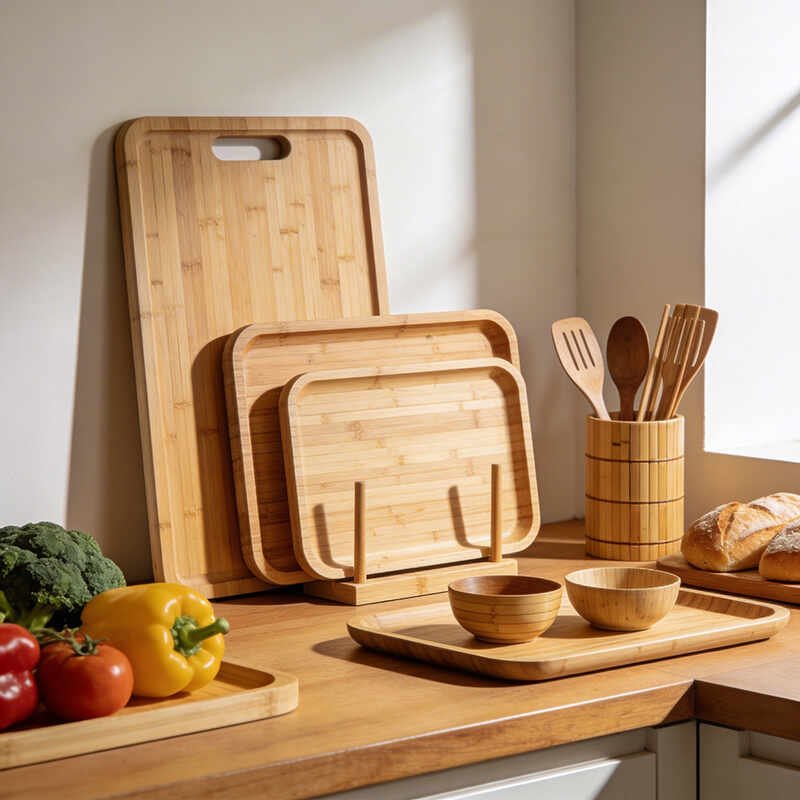
Bamboo kitchenware is one of the hottest segments in the bamboo craft industry. Global shoppers like bamboo cutting boards, serving trays, utensil holders, trivets, and salad bowls because they look natural and feel pleasant to touch.
Key products include:
- Cutting boards in different constructions (single‑layer, edge‑grain, or end‑grain) and shapes (rectangular, round, paddle).
- Serving trays with or without handles, used in cafés, catering services, and home entertaining.
- Drawer organizers, cutlery trays, and knife blocks.
- Bamboo plates, bowls, and snack boards for casual dining.
For these products, quality requirements are higher because they come into contact with food. Buyers often require food‑grade oils or coatings and may ask for test reports for standards such as FDA or LFGB.
3.3 Bamboo gifts and promotional sets
Another fast‑growing area is bamboo gift items for corporate campaigns and online brands. Sets may include a bamboo notebook with a logo, a bamboo pen, a phone stand, a wireless charger with bamboo shell, or a bamboo desk organizer.
Bamboo gift sets work well because they combine sustainability messaging with practical everyday use. They are popular for eco‑friendly corporate gifts, influencer boxes, subscription boxes, and “new home” or “new office” packages. For this niche, flexibility in small minimum order quantities (MOQs) and quick logo customization are very important.
3.4 Customized bamboo craft projects
Some buyers use bamboo craft in special projects such as hotel and resort furnishing, restaurant fit‑outs, or branded retail displays. In these cases, the supplier must provide design support, structural engineering, and project management in addition to standard production.
4.Understanding the Online Search Landscape for “Bamboo Craft”
When you look up “bamboo craft” on Google, the first page is dominated by informational resources: encyclopedias, cultural blogs, educational slides, and traditional craft articles. There are also image carousels and “People also search for” boxes that highlight queries such as “bamboo craft ideas,” “bamboo craft for school project,” and “easy bamboo craft projects.”
This layout tells us two important things.
1.Google treats “bamboo craft” primarily as an informational and inspiration keyword, not as a strong purchasing keyword.
2.The direct competition for the head keyword is high, because authority sites with long histories and strong backlink profiles already occupy most of the top positions.
For a new export‑oriented website, it is difficult to get a stable top‑page ranking with a single generic article targeting only “bamboo craft.” The better strategy is to use this broad term as a central theme and build a cluster of more specific, long‑tail articles around it.
The suggestions shown in the SERP—such as “bamboo craft ideas for school project” and “easy bamboo craft projects”—reveal real user paths. Many users start from a general curiosity about bamboo crafts, then narrow down to practical ideas, tutorials, or buying sources once they know what they want. For B2B buyers, similar paths involve searches like “bamboo handicrafts wholesale,” “bamboo kitchenware manufacturer,” or “bamboo home décor supplier
5.Long‑Tail Keywords: Where Serious Buyers Actually Search
Your analysis notes that most commercial opportunities lie not in the broad term “bamboo craft,” but in long‑tail keywords that combine product names with purchase intent. Typical patterns include:
- Product + “wholesale / bulk / supplier / manufacturer / factory / exporter” (for example, “bamboo handicraft supplier,” “bamboo craft manufacturer in China”).
- Product + application scenario (for example, “bamboo handicrafts for home décor wholesale,” “bamboo kitchenware for eco‑friendly brands”).
When you check the SERP for these long‑tails, you usually see B2B platforms like Alibaba and Made‑in‑China, combined with independent factory or trading company blogs. This indicates that Google already understands these terms as purchasing searches, so it is more willing to show supplier websites.
For a bamboo products exporter, the practical takeaway is to treat “bamboo craft” as a thematic umbrella and focus your content on long‑tail combinations that directly reflect how buyers search. Examples of blog titles that follow this logic include:
- “Bamboo Craft Wholesale Guide: How Importers Choose Reliable Suppliers”
- “Top 10 Bamboo Craft Products for Retailers in 2025”
- “Sustainable Bamboo Handicrafts for Eco‑Friendly Brands: What Buyers Should Check Before Placing Orders”
These titles keep “bamboo craft” visible while clearly signaling that the article is written for importers and wholesalers.
6.How Professional Bamboo Craft Manufacturing Works
To evaluate suppliers, buyers should understand the basic production flow behind modern bamboo craft. Although each product has its own details, the general steps are similar across categories.
6.1 Raw material selection and treatment
Bamboo craft easy?The manufacturing process of bamboo handicrafts is not simple. From raw materials to finished products, the manufacturing of bamboo handicrafts involves many processes.Factories usually source bamboo culms from local plantations and then cut them into appropriate lengths. The material is split into strips, boiled or steamed to remove sugars, then dried to the required moisture content to prevent cracking and mold.
Some products use laminated bamboo boards made by gluing strips under pressure. These boards allow more precise machining and mimic the behavior of wood panels, which is why they are popular for cutting boards, trays, and furniture parts.
6.2 Cutting, shaping, and joining
CNC routers, saws, and milling machines cut the bamboo components into their final shapes. Traditional hand‑craft techniques, such as bending or weaving, are still used for certain designs, especially baskets or lampshades. Parts are joined with adhesives, dowels, nails, or screws depending on the load‑bearing needs.
6.3 Sanding and finishing
The products are sanded in multiple stages to create smooth surfaces. Depending on the market requirements, factories apply clear oils, water‑based varnishes, or color stains. For kitchenware, food‑grade oils and coatings are essential, and reputable suppliers will provide corresponding test reports.
6.4 Quality control and packing
Serious exporters run incoming material checks, in‑process inspections, and final inspections based on AQL standards. They monitor dimensions, surface quality, structural strength, and finishing consistency. After inspection, products are packed in inner boxes and master cartons with barcodes, labels, and user manuals as required by the buyer.
When evaluating potential partners, buyers should ask how each of these stages is handled, which machines are used, and what quality certifications the factory has obtained.
7.Key Quality Points for Bamboo Craft Buyers
Bamboo craft can look beautiful in photos but still cause problems after delivery if quality factors are ignored. Professional buyers should pay close attention to the following aspects when developing new products.
7.1 Moisture content and stability
If the bamboo is not dried properly, products may crack, warp, or grow mold in humid climates. Buyers should ask suppliers about their drying method, typical moisture range, and storage conditions.
7.2 Surface treatment and safety
Finishing materials must match the product’s final use.
- For kitchenware, insist on food‑safe coatings and verify them through third‑party tests.
- For children’s or school items, check that paints and glues comply with relevant regulations on heavy metals and chemicals.
- For outdoor products, discuss UV and moisture protection and clarify realistic lifetime expectations.
7.3 Construction and load‑bearing
Laundry baskets, shelves, and trays need to withstand regular use without breaking. Buyers should confirm maximum recommended loads, joint methods, and reinforcement solutions during sampling, not after complaints from end users.
7.4 Color consistency and appearance
Because bamboo is a natural material, color and grain vary between culms. Professional factories sort materials, control finishing processes, and agree with buyers on acceptable variation ranges, often using photo standards.
8.How to Choose a Reliable Bamboo Craft Supplier
Your document emphasizes that content aimed at B2B buyers should highlight the supplier’s professional capabilities rather than just DIY instructions and easy bamboo craft projects. The same principle applies when you are actually selecting suppliers for your business.
Here is a practical checklist importers can use.
1.Product focus– Confirm whether the factory specializes in your target category, such as home décor or kitchenware, rather than making random products.
2.Production facilities– Request photos or videos of workshops, machines, and warehouses to understand scale and organization.
3.Certifications and audits– Check for certificates related to quality systems, social compliance, or sustainability, and review any existing retailer audits.
4.Sampling process– Evaluate responsiveness, sample lead time, and the supplier’s ability to modify designs based on your feedback.
5.MOQ and capacity– Make sure minimum order quantities and monthly capacity match your business plan, especially if you are launching multiple SKUs.
6.Communication style– Pay attention to detail, clarity, and honesty in communication, as these soft factors often predict future cooperation success.
Many successful importers work with a small group of core suppliers and invest time in building long‑term relationships. This approach allows stable quality and smoother new product development over the years.
9.Designing Bamboo Craft Collections for Your Market
Instead of sourcing single items one by one, experienced buyers plan coherent collections or “stories” around bamboo craft. This helps with merchandising, marketing, and container optimization.
9.1 Home décor and storage collection
One possible collection targets home décor and storage. It might include:
- Picture frames in several sizes with matching finishes.
- Ashtrays, tissue box covers, and small storage boxes with similar design language.
- Laundry baskets and storage bins that use the same bamboo tone and fabric linings.
This collection could be marketed to retailers, hotel groups, and lifestyle brands that want to introduce a natural line across different rooms.
9.2 Kitchenware and tabletop collection
Another collection revolves around bamboo kitchenware. A typical range might feature:
- Cutting boards in various sizes and constructions.
- Serving trays, snack boards, and lazy Susans.
- Drawer organizers, utensil holders, and small countertop racks.
For online brands, it is common to sell these items in sets or bundles to increase average order value.
9.3 Sustainable gifts and corporate programs
For corporate programs, you can build sets that combine several small bamboo items in a branded box. Because the same components can be rearranged into many configurations, MOQs can remain manageable while still offering customization.
When planning collections, it is helpful to involve your supplier early so that shared components and materials can be used across SKUs, reducing tooling and inventory costs.
10.Using Content and SEO to Attract Bamboo Craft Buyers
Your PDF suggests treating “bamboo craft” as a hub topic supported by multiple long‑tail articles that target specific buyer needs. This strategy not only helps SEO but also builds trust with potential customers.
A recommended structure is.
- One pillar article titled something like “What Is Bamboo Craft? A Complete Guide for Importers and Brands,” which explains material basics, applications, and sustainability—similar to this article.
- Sub‑articles focused on purchase guides, such as “Bamboo Home Décor Wholesale Guide,” “Bamboo Kitchenware Manufacturer Guide,” and “Custom Bamboo Gift Sets for Corporate Buyers.”
- Case‑study or checklist posts that address practical questions, for example “7 Things to Confirm Before Ordering Bamboo Cutting Boards” or “How We Helped a Retailer Launch a Bamboo Home Line.”
Within each article, internal links point to related posts and product pages, creating a topic cluster that signals expertise to search engines. Over time, this cluster can rank for many long‑tail queries and gradually move the pillar content closer to the first page for the broader term “bamboo craft.”
The SERP screenshot you provided also shows an image block, which means Google values strong visuals for this topic. Uploading original photos of your bamboo craft products and production process, optimized with descriptive alt text including long‑tail keywords, can bring additional traffic from image searches.
11.Practical Tips for First‑Time Bamboo Craft Importers
If you are new to bamboo craft sourcing, the following simple practices can prevent many problems.
- Start with a limited number of SKUs and focus on getting the quality right before expanding.
- Ask for detailed specifications and drawings rather than relying on photos alone.
- Define clear packaging standards, including barcodes, labels, and inner protection.
- Schedule pre‑shipment inspections, especially for the first few orders or new designs.
- Keep some stock for potential replacements or after‑sales service if you are selling under your own brand.
As you gain experience, you can explore more complex designs that combine bamboo with fabrics, glass, or metal to create unique pieces that competitors cannot easily copy.
12.The Future of Bamboo Craft in Global Trade
Looking ahead, bamboo craft is likely to become even more important in the sustainable home and kitchen segment. Governments, retailers, and consumers are all pushing for reduced plastic usage and better environmental performance, and bamboo offers a credible story when managed responsibly.
For importers and brands, success will depend on more than just choosing attractive designs. The real advantage will come from building close partnerships with capable bamboo craft factories, investing in product development, and communicating clear sustainability messages supported by real practices.
Used wisely, bamboo craft can be more than a trend; it can become a core pillar of a long‑term product strategy that combines aesthetics, functionality, and environmental responsibility.
FAQ: Bamboo Craft Sourcing for Importers
Q1: Is bamboo craft really more sustainable than wood or plastic?
Bamboo grows back much faster than most hardwoods and can be harvested within a few years, so it is generally considered a rapidly renewable resource. Many brands choose bamboo craft to reduce dependence on plastics and slow‑growing tropical timber, while also giving products a natural look that consumers associate with eco‑friendly lifestyles.
Q2: Which bamboo craft products sell best in overseas markets?
In many markets, bamboo kitchenware such as cutting boards, serving trays, and drawer organizers perform very well because they are practical and easy to understand for end users. Home décor and storage items like picture frames, tissue box covers, and laundry baskets are also popular, especially when presented as coordinated collections that fit current interior trends.
Q3: What minimum order quantity (MOQ) should I expect for bamboo craft items?
MOQs vary by factory and product type, but standard items usually start from a few hundred to 1,000 pieces per SKU. For customized designs or gift sets with special packaging, suppliers may require higher MOQs to cover tooling, setup costs, and material purchasing.
Q4: How can I make sure bamboo kitchenware is food‑safe?
Ask your supplier which oils, coatings, and adhesives they use and whether these materials meet the regulations in your target market. For serious projects, it is best to request third‑party test reports (for example to FDA or LFGB standards) for representative samples or actual production batches.
Q5: What are the most common quality problems with bamboo craft, and how can I avoid them?
The main issues are cracking, warping, mold, rough surfaces, and unstable joints caused by poor drying or weak construction. You can reduce risks by checking the factory’s drying process, approving pre‑production samples, defining clear specifications, and arranging independent inspections before shipment.
Q6: How long does it usually take from sampling to shipment for a new bamboo craft order?
Sampling for existing designs may take one to two weeks, while custom developments can require several rounds over four to six weeks. After samples are approved, mass production typically needs 30–60 days depending on order quantity, factory capacity, and how many different SKUs are included.
Q7: Can bamboo craft be used outdoors?
Some bamboo craft items can be used outdoors, but buyers should understand that bamboo is still a natural material sensitive to moisture and sunlight. For outdoor projects, discuss protective treatments, realistic service life, and care instructions with your supplier so that end‑user expectations match the product’s actual performance.
Q8: What information should I prepare before asking for a quotation?
You will get faster and more accurate quotes if you share intended order quantity, target market, preferred materials and finishes, packaging requirements, and whether you need test reports or social‑compliance audits. Clear reference photos or drawings also help factories understand your expectations and suggest cost‑effective structures.

Leave A Comment