
What Are Bamboo Racks?
Bamboo racks are multi‑tier storage structures made primarily from bamboo poles or laminated bamboo boards, designed for organizing and displaying items in your home or workplace. They typically come in open‑shelf designs that allow air to circulate, making them ideal for kitchens, bathrooms, living rooms, and balconies where ventilation and quick drying matter. Because bamboo is naturally lightweight yet strong, these racks offer a practical balance of portability and durability for everyday use.
Unlike closed cabinets, bamboo racks usually feature slatted shelves and minimalist frames, so they visually “open up” a space instead of making it look heavy or crowded. Many models are free‑standing, while some are wall‑mounted or designed to sit over fixtures such as toilets, sinks, or countertops to make use of vertical space. This combination of open design, natural material, and flexible sizing is what makes bamboo racks especially attractive to apartment dwellers and small‑space homeowners.
Key Benefits of Bamboo Racks
Bamboo racks are more than just pretty shelving; they solve several common storage problems in a compact way.
- Lightweight but sturdy– Bamboo has a high strength‑to‑weight ratio, so racks can support everyday items like dishes, toiletries, books, and plants without feeling bulky to move.
- Moisture‑tolerant– Quality bamboo racks are often treated or sealed, which helps them cope better with humid environments like bathrooms and kitchens than many untreated woods.
- Space‑saving vertical storage– Most bamboo racks are tall and narrow instead of wide, helping you use vertical wall height to free up floor and counter space.
- Natural aesthetic– The warm grain and neutral tones of bamboo blend with Scandinavian, Japanese, boho, and modern minimalist interiors, giving a clean but cozy look.
- Eco‑conscious material– Bamboo is a fast‑growing grass rather than hardwood, so it is often marketed as a more sustainable alternative to traditional wooden shelving.
- Versatile placement– The same style of rack can move from the bathroom to the balcony or from the living room to a home office as your storage needs change.
For shoppers who arrive on “bamboo racks” from a product‑oriented search, highlighting these benefits up front helps them quickly connect the rack to their real‑world problems such as cluttered counters, disorganized spices, or damp towels.
Common Types of Bamboo Racks
Although “bamboo racks” is a broad product term, most listings on e‑commerce pages and category pages fall into a few recognizable types.
1.Bamboo Kitchen Racks
Bamboo kitchen racks are designed for dishes, spices, cutting boards, and countertop organization. Some are multi‑tier dish racks with slots for plates and side arms for cups, while others are step‑style spice racks that fit inside cabinets or on counters. You will also find expandable bamboo racks that stretch to fit wider counters or compress to fit narrow ones, which is especially useful in small kitchens.
A typical bamboo rack for kitchen offers slatted shelves that allow water to drip off dishes and air to circulate, reducing the risk of mold on damp items. Many are foldable or collapsible, so you can store them away when not in use or move them outdoors for entertaining.
2.Bamboo Bathroom Racks
Bamboo rack for bathroom focus on storing towels, toiletries, and bath accessories while resisting humidity. Over‑toilet bamboo racks, for example, stand on the floor and arch over the toilet tank to create tiers of storage where there was previously empty air. Narrow bamboo ladder racks or corner racks slip into tight gaps beside the shower or sink to hold bottles and baskets.
These racks are usually treated or coated to handle steam and splashes, and their ventilated shelves help towels dry faster. Because they combine storage with a clean spa‑like look, they’re especially popular in small apartments and rental bathrooms where permanent built‑ins are not an option.
3.Bamboo Shoe Racks
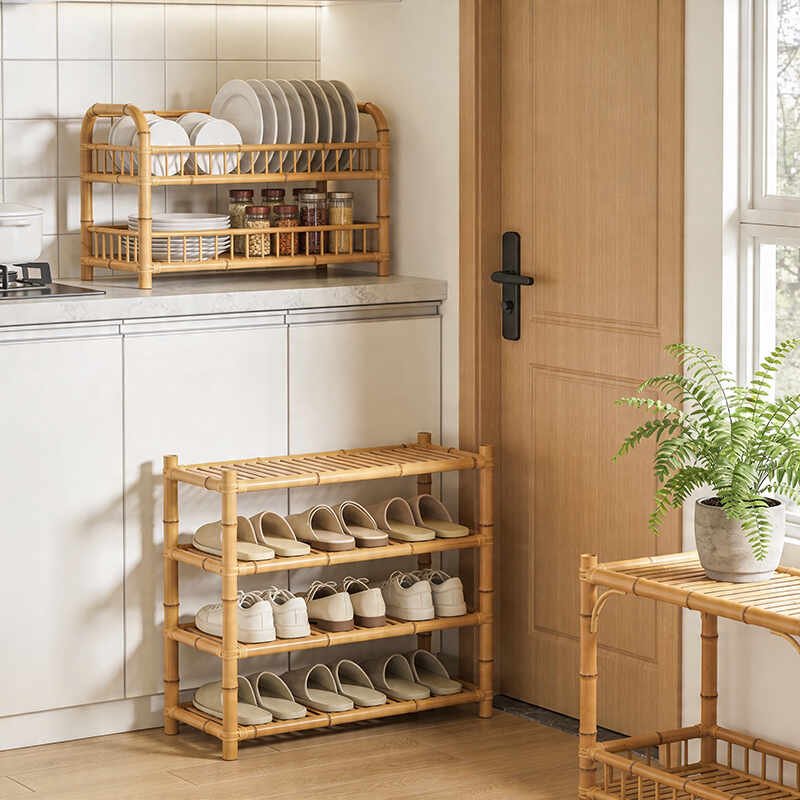
Bamboo shoe racks are typically low, bench‑height structures with two to five tiers, designed to sit near an entryway, in a closet, or on a balcony. The slatted design lets dirt fall through and air flow around shoes, reducing odor buildup compared with solid plastic shelves. Some models include a seating bench on top so you can sit while putting on your shoes, which is ideal for busy households with children or elderly family members.
Because bamboo is lighter than many woods, these shoe racks are easy to reposition as you reorganize your hallway or wardrobe. They also pair well with neutral décor, woven baskets, and doormats, creating a cohesive, clutter‑free entry zone.
4.Bamboo Plant Racks and Display Stands
Plant‑focused bamboo racks often have tiered, staggered shelves to give each plant access to light. You will see ladder‑style plant stands with steps of varying widths, corner stands that turn unused corners into green towers, and rolling racks that can be moved toward windows or outdoors.
Bamboo’s natural look complements greenery, making it an easy choice for indoor gardens and balcony displays. Some racks are rated for outdoor use with additional weather‑resistant finishes, while others are designed strictly for covered balconies or indoor rooms.
Outdoor bamboo plant racks and display stands are designed to bring vertical greenery to balconies, patios, and garden corners while coping with wind, sunlight, and changing weather. Compared with purely indoor models, they typically feature sturdier frames, thicker slats, and additional cross‑bracing so they can support heavier ceramic pots and damp soil without wobbling. Many outdoor designs use a tiered or ladder‑style structure, allowing plants at different heights to receive sufficient light and creating a layered visual effect that looks lush even in a small footprint. Because floor space is often limited on balconies, this vertical layout is essential for growing more herbs, flowers, and succulents without cluttering walkways or blocking doors.
A key characteristic of bamboo racks outdoor is their focus on drainage and ventilation. The shelves usually have wide, evenly spaced slats so excess water can run off quickly after rain or watering, reducing the risk of root rot and slippery surfaces. Open sides and backs let air circulate freely around leaves and pots, which helps plants dry faster and keeps the bamboo itself from staying damp for long periods. Many models are slightly raised off the ground on small feet to prevent standing water from collecting at the base, an important detail for balconies exposed to rain. When describing these racks in a product-focused article, it is worth emphasizing how this structure supports healthier plants and easier maintenance for the user.
Outdoor bamboo display stands also need surface treatments that handle UV exposure and moisture better than untreated bamboo. High-quality products often use weather-resistant coatings, such as clear outdoor varnish or specialized sealants, that slow down fading, cracking, and mildew. Some racks are advertised specifically for “covered outdoor use,” meaning they perform best on sheltered balconies, porches, or under eaves rather than in fully open gardens. Clarifying this distinction in your content helps manage customer expectations and reduces complaints about weather damage when racks are left in direct rain or intense sunlight. You can also suggest simple protective habits—like rotating the rack occasionally or moving it indoors during storms—to prolong its life.
From a styling perspective, outdoor bamboo plant racks and display stands are designed to merge function with a natural, decorative feel. The warm bamboo color pairs well with terracotta pots, green foliage, and neutral outdoor textiles, creating an inviting small-garden atmosphere even on a high-rise balcony. Staggered shelves make it easy to group plants by height, color, or type, turning the rack into a focal point rather than just storage. Some designs include special corner shapes, foldable frames, or integrated hooks, enabling users to adapt the rack to different layouts and seasonal displays. When you present these features clearly, searchers looking for “bamboo racks” can immediately see why an outdoor bamboo plant rack or display stand is a smart solution for maximizing limited outdoor space while keeping their plants organized and visually appealing.
5.Bamboo Bookshelves and General Storage Racks
At the larger end, bamboo racks also appear as full‑height bookshelves and multipurpose storage units. These may have four to six tiers and can hold everything from books and storage bins to folded clothes and decorative objects. For renters or students, such racks offer a compromise between heavy wooden furniture and flimsy wire shelving.
Their open backs and sides allow you to use baskets or fabric bins to hide smaller items while keeping the overall structure light and airy. Many designs are modular, so you can combine two or more units side by side or stack compatible pieces to create a custom storage wall.
Key Buying Factors: How to Choose the Right Bamboo Rack
When a user searches “bamboo racks,” they are typically close to purchase and comparing several listings or brands. Organizing your product information around practical buying factors will help them decide faster and feel more confident in their choice.
1.Dimensions and Space Planning
- Measure the available space before choosing a rack: height, width, depth, and any obstacles like baseboards or faucets.
- Check whether doors, drawers, or windows will hit the rack when opened; for bathrooms and kitchens, pay attention to plumbing and electrical outlets.
- For narrow spaces, look for slim vertical racks or ladder designs; for open areas, a wider, lower rack can double as a bench or sideboard.
Including a simple measurement example in product copy helps: “For a 60 cm wide kitchen counter, a rack that is 55 cm wide leaves space for a knife block or utensil holder beside it.”
2.Weight Capacity and Shelf Strength
Bamboo racks vary widely in how much weight they can safely support.
- Kitchen dish racks and bookshelves need higher load capacity than plant racks meant for small pots.
- Look for details on per‑shelf load (for example, 10–15 kg per tier for sturdy racks versus 3–5 kg for lighter models).
- Thicker bamboo slats, double‑support crossbars, and additional side braces usually signal a stronger structure.
Explain clearly in product text what type of items the rack is designed for—for example, “suitable for up to 20 pairs of adult shoes” or “supports small to medium houseplants, not heavy ceramic pots.”
3.Surface Treatment and Moisture Protection
Untreated bamboo can absorb water and stain or warp over time, especially in bathrooms or near sinks. Good bamboo racks often have one or more of the following:
- Clear varnish or lacquer to seal the surface and make it easier to wipe clean.
- Carbonization treatment that deepens the color and improves moisture resistance.
- Rounded, sanded edges to prevent splinters and water pooling.
If your rack is optimized for wet environments, mention that explicitly and clarify whether it is suitable for direct outdoor rain or only for indoor humidity.
4.Assembly and Hardware
Most bamboo racks ship flat‑packed and require home assembly.
- Pre‑drilled holes, labeled parts, and included tools (like Allen keys) make the process smoother.
- Extra screws or dowels and clear step diagrams reduce frustration and returns.
- Some racks use visible metal screws, while others hide fasteners for a cleaner look; both approaches can be highlighted honestly, depending on whether ease of assembly or aesthetics is more important.
Customers appreciate realistic assembly time estimates, such as “approximately 20–30 minutes for one person with a screwdriver.”
5.Safety and Stability
Particularly for tall bathroom racks or plant stands, stability matters.
- Anti‑tip hardware (wall straps or brackets) helps prevent tipping if children pull on the rack.
- Non‑slip feet or pads protect floors and keep racks from sliding on tile or laminate.
- Cross braces or X‑shaped back supports increase rigidity without adding much weight.
Clearly showing how the rack stays stable builds trust and answers an unspoken concern many buyers share.
6.Style, Color, and Finish
Bamboo racks typically range from pale natural tones to caramelized, coffee‑colored finishes.
- Light finishes suit Scandinavian and Japanese‑inspired interiors, where simplicity and brightness are key.
- Darker finishes pair better with industrial or modern spaces and can echo darker flooring or countertops.
- Some racks combine bamboo shelves with white or black metal frames, which can be positioned as a more contemporary, mixed‑material look.
Product photos and descriptions should emphasize how the rack integrates with common interior styles, not just its dimensions.
Practical Use Cases for Bamboo Racks
Writing your article around concrete scenarios makes it easier for readers to see how a bamboo rack fits their life and increases the chance of conversion.
In a Small Kitchen
A two‑ or three‑tier bamboo rack can sit beside the sink to hold drying dishes and utensils, freeing the rest of the counter for food prep. A wall‑mounted bamboo spice rack over the stove keeps frequently used herbs and oils within arm’s reach, while a narrow floor rack can hold cutting boards and pans vertically.
For renters who cannot install heavy cabinets, a free‑standing bamboo shelving unit can act as a mini pantry for jars, cereal boxes, and small appliances like air fryers and rice cookers.
In a Compact Bathroom
A bamboo rack over the toilet instantly adds tiers for toilet paper, hand towels, and baskets of cosmetics, without drilling into the wall. A narrow tower rack beside the sink can stack skincare, toothbrush holders, and extra soap, keeping the vanity top clear.
Bamboo ladder racks are ideal for hanging towels and bathrobes to dry; because the rungs are spaced apart, air can circulate around each towel. For households that share a bathroom, labeling baskets on each shelf helps everyone keep their items in one spot.
In Living Rooms and Bedrooms
In the living room, a bamboo shelving rack can display books, photo frames, candles, and small plants, functioning as a light‑feeling bookcase. In a bedroom, a narrow rack can hold folded clothes or storage boxes for accessories, freeing closet hanging space for larger garments.
Students and renters often choose bamboo racks because they are easier to carry up stairs and through doorways than solid wood bookcases, yet more attractive than plastic shelves.
On Balconies and Near Windows
Many people use bamboo racks as plant stands on balconies or near sunny windows. Multi‑tier designs let you grow more plants in a small footprint, and the open slats prevent water from pooling after watering.
For balconies in humid or rainy climates, it’s important to choose racks with weather‑resistant treatments and to keep them under cover when possible. Including this advice in product descriptions positions your brand as thoughtful and reduces complaints about weather damage.
Care, Cleaning, and Maintenance Tips
Proper care extends the life of bamboo racks and keeps them looking clean and fresh.
- Wipe spills and standing water immediately, especially around plant pots and soap dispensers.
- Clean with a soft cloth dampened with mild soapy water; avoid harsh chemicals or soaking.
- Dry thoroughly after cleaning, preferably in a well‑ventilated area.
- Use coasters, trays, or plant saucers to catch drips and prevent staining.
- Avoid placing very hot objects directly on bamboo surfaces.
Over time, bamboo may slightly darken or develop patina with use, which many people find attractive. If the finish wears, you can lightly sand and apply a food‑safe oil or clear sealant to refresh the surface, as long as the manufacturer’s instructions allow it.
Example Feature Table for Bamboo Racks
You can integrate a simple feature table in your article to help buyers compare bamboo racks quickly.
| Rack type | Typical height & tiers | Best location | Key advantages |
|---|---|---|---|
| Kitchen bamboo rack | 2–3 tiers, 30–60 cm high | Countertop beside the sink | Draining dishes, organizing spices and boards |
| Bathroom bamboo rack | 3–4 tiers, 80–160 cm high | Over toilet, beside shower | Uses vertical space, handles humidity |
| Bamboo shoe rack | 2–5 tiers, 40–90 cm high | Entryway, balcony, closet | Ventilates shoes, can double as seating bench |
| Bamboo plant stand | 3–6 tiers, 60–150 cm high | Balcony, near window | Maximizes light for multiple plants |
| Bamboo bookshelf rack | 4–6 tiers, 120–180 cm high | Living room, bedroom, office | Light alternative to solid wood bookcases |
Using such a table within the content gives a category‑page feel while still remaining a blog article.
12 FAQs About Bamboo Racks
Below are 12 product‑focused FAQs you can place at the end of your “bamboo racks” article to target question‑type long‑tail searches and answer buyer concerns.
1.What are bamboo racks made of?
Most bamboo racks are made from natural bamboo poles or laminated bamboo boards, sometimes combined with metal screws or frames for added strength.
2.Are bamboo racks strong enough for heavy items?
Quality bamboo racks can hold a surprising amount of weight for their size, but capacity varies; always check the manufacturer’s stated per‑shelf load before placing heavy items like stacks of books or large ceramic pots.
3.Can I use a bamboo rack in a bathroom?
Yes, many bamboo racks are designed for humid bathrooms and have protective coatings, but it is still important to avoid prolonged standing water and to dry surfaces when they get wet.
4.Are bamboo racks suitable for outdoor use?
Some bamboo racks are rated for covered outdoor areas like balconies, especially if they have weather‑resistant finishes, but most should be protected from direct rain and strong sunlight to prevent cracking or discoloration.
5.How do I clean and maintain a bamboo rack?
Wipe the rack with a soft cloth and mild soapy water, dry thoroughly, and avoid harsh chemicals or soaking; use trays or mats under plants and toiletries to prevent stains.
6.Do bamboo racks require assembly?
Nearly all bamboo racks are shipped flat‑packed and require simple assembly using screws or dowels; clear instructions and labeled parts help most customers finish in under an hour.
7.Will a bamboo rack mold in a humid environment?
Good ventilation in the slatted design helps bamboo racks dry quickly, reducing mold risk, but in very humid spaces you should still ensure airflow and wipe any condensation or spills promptly.
8.Can I repaint or refinish my bamboo rack?
In many cases you can lightly sand and refinish bamboo with a suitable clear coat or paint, but you should first check the original finish and follow the manufacturer’s recommendations.
9.Are bamboo racks environmentally friendly?
Bamboo grows much faster than most hardwood trees and can be harvested more frequently, so it is often presented as a more sustainable material, especially when sourced and manufactured responsibly.
10.What is the difference between a bamboo rack and a bamboo shelf?
In everyday use, “bamboo rack” often refers to open, multi‑tier stands for items like dishes, shoes, or plants, while “bamboo shelf” can refer either to individual wall‑mounted boards or full shelving units; many products use the terms interchangeably.
11.How do I choose the right size bamboo rack for my space?
Measure the width, depth, and height of your available space, leave a few centimeters of clearance at the sides and top, and consider how doors, drawers, or windows will move around the rack before selecting a model.
12.Can bamboo racks be folded or moved easily?
Many bamboo dish racks and small storage racks are foldable or lightweight enough to move between rooms, making them ideal for renters and people who rearrange their space frequently.


Leave A Comment